Author name: aiQbQ@LOgIn

Safety Branding in Building a Strong Safety Culture - AIQBQ
Safty Branding

The Role of Safety Branding in Building a Strong Safety Culture

In today’s industrial and corporate world, safety isn’t just a compliance requirement; it’s a mindset. A truly safe workplace is one where every employee, contractor, and visitor instinctively values and practices safety every day. This mindset doesn’t develop overnight; it is cultivated through effective safety branding, a strategic approach that reinforces safety values, visual identity, and behavioral commitment across all levels. At AIQBQ, we believe that safety branding is the cornerstone of a strong safety culture. It’s not just about visuals or signage it’s about influencing how people think, act, and feel about safety. What Is Safety Branding? Safety branding is the process of giving safety its own recognizable identity within an organization one that employees can relate to and take pride in. It includes everything from safety visuals, communication campaigns, and digital awareness materials to environmental graphics and on-site safety zones. When done right, safety branding transforms routine safety messages into inspiring calls for consistent, proactive action. Why Safety Branding Matters Creates a Unified Safety Message Instead of scattered reminders, a strong safety brand ensures that every communication from posters to toolbox talks reflects a single, cohesive safety philosophy. Builds Emotional Connection Employees are more likely to internalize safety principles when they connect emotionally to a brand that represents care, protection, and shared responsibility. Improves Recall and Compliance Consistent safety visuals and slogans reinforce memory. Workers remember safety procedures better when they see familiar branding elements around them. Drives Leadership Commitment When management actively participates in safety branding, it signals seriousness turning policies into real cultural change. How Safety Branding Builds a Strong Safety Culture A safety culture thrives when awareness meets engagement. Here’s how branding plays a key role: Visibility and Reinforcement: Eye-catching designs and strategically placed messages make safety impossible to ignore. Behavioral Influence: Through repetition and relatability, branding transforms safety from obligation to habit. Peer-to-Peer Communication: Branded safety campaigns foster conversations and community ownership of safety standards. Identity and Pride: Employees take pride in being part of a company known for safety excellence, strengthening loyalty and accountability. AIQBQ’s Approach to Safety Branding At AIQBQ, we combine creativity, strategy, and behavioral insight to help companies build their unique Safety Branding Identity (SBI). Our services include: Customized Safety Communication Campaigns Tailored messages and visuals that align with your organization’s tone and values. Environmental & Digital Branding On-site safety walls, digital signage, and training visuals that reinforce the safety message visually and emotionally. Employee Engagement & Training Materials Creative tools that make learning about safety interactive, engaging, and lasting. End-to-End Implementation Support From concept to design to deployment, AIQBQ ensures consistency across all safety communication channels. With a proven track record in industrial safety branding, we help organizations turn compliance into culture. Key Benefits of Partnering with AIQBQ Consistency Across Locations: Unified branding that aligns multiple sites under one safety identity. Enhanced Employee Awareness: Visual cues and messaging that make safety second nature. Boosted Corporate Image: Demonstrates your brand’s commitment to employee welfare and responsibility. Long-Term Behavioral Change: Moves beyond campaigns to create a sustainable, self-driven safety culture. The Future of Safety Branding: 2025 and Beyond As workplaces evolve with automation and digital tools, the future of safety culture will depend on how effectively organizations humanize safety communication. Visual storytelling, digital engagement, and emotional branding will define the next era of workplace safety. By integrating AIQBQ’s Safety Branding Services, companies can future-proof their safety culture ensuring that safety is not just seen, but felt and lived every day.

Safety Branding Services - AIQ
Safty Branding

Safety Branding: What It Is and What It Does for Your Business

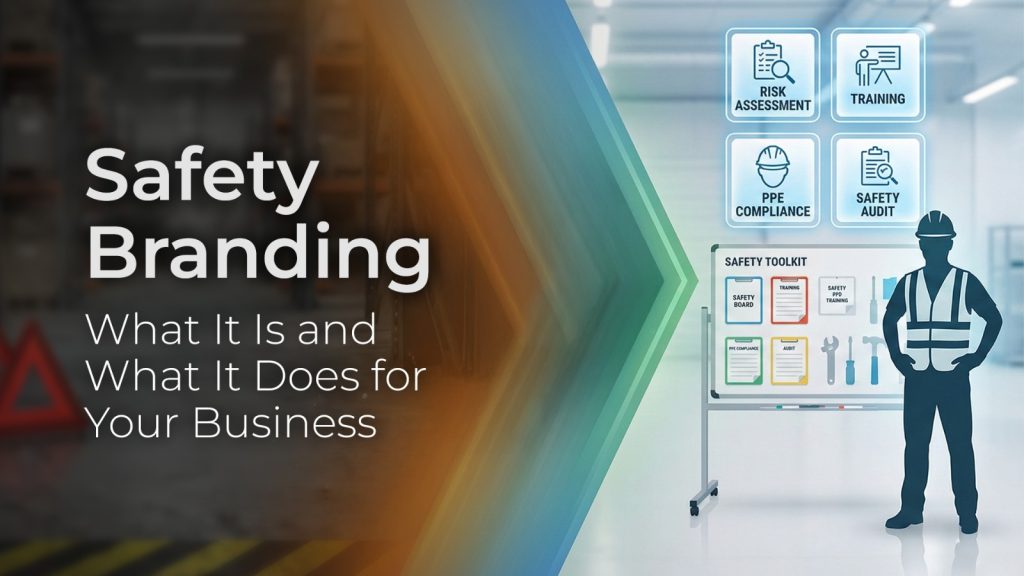
The incident you didn’t see coming usually sent warnings first! So stop waiting for a wake-up call… A near-miss doesn’t arrive with sirens but as a shortcut, a misunderstood sign, a rushed handover, a contractor guessing instead of knowing, a seasoned worker saying “it’ll be fine.” Then one day, a “minor lapse” becomes the metric nobody wants on the dashboard: TRIR, LTIR, DART, downtime, investigations, reputational risk. Many safety programs deliberately push for far more near-miss reporting than actual incidents (often discussed as a 10:1 near-miss-to-incident mindset) because it indicates hazards are being caught early before harm happens. First, people must notice, then they must understand, then they must remember, and only then do they act, especially when the workplace is loud and fast. That is the gap Safety branding is built to close. Safety branding is how safety becomes instantly recognisable, easy to grasp, and hard to ignore across shifts, sites, teams, and contractors. What Safety branding really is Safety branding is the deliberate way an organisation makes safety visible, repeatable, and culturally “default” through a consistent identity, clear messaging, and behavioural cues across every touchpoint. Enterprise safety culture research treats safety culture as a multi-factor system influenced by leadership and communication, which is why Safety branding needs to be systematic, not a one-off poster burst. In practice, Safety branding shows up in how your workforce experiences safety: induction kits, site signage, PPE prompts, toolbox talk formats, micro-content, reporting nudges, leadership scripts, and recognition programs, so the message doesn’t change with the person delivering it. This is where Safety branding services matter; to build a unified safety language that scales. And if you’re exploring Safety Branding services in Pune, Safety branding becomes a market-facing signal too, showing clients, auditors, and talent that your safety culture is designed, not accidental. Why Safety branding matters Safety branding works because it reduces cognitive load at the exact moment it matters when people are tired, rushed, distracted, or new to the environment. One key reason Safety branding matters is that it makes safety easier to grasp: simple visuals and signage improve understanding and recall of safety rules. Safety branding also creates clear, consistent messaging across all shifts and teams, reducing confusion and building one common safety language. It directly supports faster, easier training by making onboarding and refreshers quicker and more effective, saving time and effort while improving absorption. Safety branding supports compliance and involvement by helping meet audit expectations and encouraging active employee participation in safety practices. This is the compulsion: when safety is easy to understand and consistent to follow, you reduce reliance on memory and hearsay. When safety is hard to decode, people improvise, and improvisation is where risk multiplies. Why do you need Safety Branding services If Safety branding is the “what,” Safety branding services are the “how,” i.e., to say the structured, repeatable system that makes safety stick on the ground. The right Safety branding services are not “one-size-fits-all”; they’re designed to fit your space, your team, and your culture because safety works best when it feels like it belongs in the workplace. When considering Safety Branding services, look for partners who bring more than safety knowledge because influence requires more than rules. AiQ-BQ positions its Safety branding services around a cross-functional team spanning safety, branding, psychology, and communication. This ensures that the work is engineered for real behaviour change, not just compliance language. They also emphasise measurable impact: stronger recall, faster training, and increased adherence to protocols without repeated policing; outcomes that matter to both EHS and business leaders. Their approach is described as a PURPOSE–VISION–SCOPE framework, positioned as a tested, real-world method tailored to the workplace, people, and safety goals rather than a generic template. Safety areas your Safety branding services can cover Safety branding becomes far more credible when it anchors to the safety realities your teams actually face. AiQ-BQ highlights key safety areas commonly addressed through Safety branding services, including PPE, Lockout/Tagout (LOTO), behavioral safety programs, hazard identification, chemical safety, working at heights, emergency response (including fire prevention strategies and emergency action plans), and electrical safety & arc flash training. The urgency: why “later” is costlier than it looks Lagging indicators like TRIR are calculated against hours worked (commonly using the 200,000-hours standardization in safety rate formulas), but the organisational cost shows up long before the math does through near-misses, repeated deviations, and silent normalisation of risk. Safety communication effectiveness is often treated as a measurable KPI because clarity and comprehension influence safety commitment if people don’t clearly understand or trust the message, behaviour won’t follow consistently. In other words, if your safety communication is fragmented today, the compounding risk is already active, just not yet visible on the scorecard. Use cases (how Safety branding converts into action) Contractor-heavy plants: Safety branding services standardise induction, signage, and “stop-work” language so contractors don’t rely on verbal handovers alone. Multi-shift operations: Safety branding creates the same cues and the same message on every shift, so safety isn’t dependent on which supervisor is on duty. Rapid scaling: Safety Branding services in Pune can help roll out consistent systems across sites faster when expansion brings new people, new vendors, and new risk. Here’s What You Can Do If safety communication feels scattered, hard to recall, or “alive only during audits,” it’s time to formalise Safety branding into a system, not a seasonal campaign. Reach out for Safety branding services that start with a quick on-ground audit and end with a 30-day rollout plan: visuals that simplify, messaging that stays consistent across shifts, and training assets that land faster. If you’re specifically evaluating Safety Branding services in Pune, ask for a site-ready Safety branding toolkit tailored to your workforce reality so safety becomes visible, relatable, and followed without being told twice.
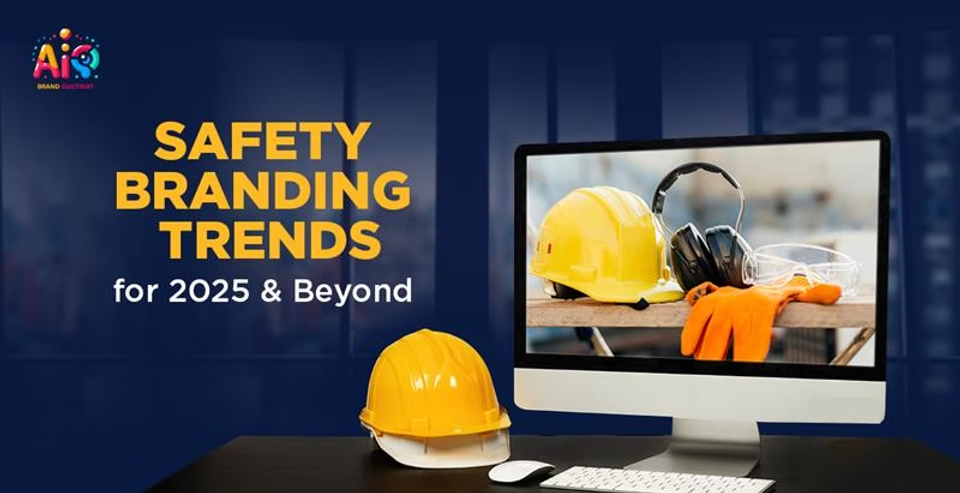
Safety Branding Trends 2025
Safty Branding

Safety Branding Trends for 2025 & Beyond

In today’s fast-paced industrial landscape, safety is no longer a back-office compliance function, it has become an essential part of workplace culture and corporate identity. Across sectors, organizations are recognizing that safety is not just about protecting employees from accidents; it’s about creating an environment where people feel valued, empowered, and engaged. This transformation is being led by Safety Branding, a holistic approach that makes safety a visible and integral part of an organization’s brand. As we move into 2025 and beyond, new technologies, cultural shifts, and global best practices are shaping how industries implement and communicate safely. Let’s explore the most impactful Safety Branding trends for 2025 that every forward-thinking organization should consider. 1. Digital-First Safety Communication The shift toward digital workplace communication is accelerating. Posters and static signage are no longer enough to capture attention. Companies are now using digital dashboards, mobile apps, and interactive displays to reinforce safety messages. By 2025, expect to see: AI-powered safety alerts on mobile devices. Real-time dashboards showing compliance scores and incident-free days. Gamified apps that reward employees for reporting near misses or safe practices. Digital safety communication not only engages employees but also ensures consistency across large and distributed workforces. 2. Personalization in Safety Branding One size doesn’t fit all. In diverse industries like manufacturing, logistics, and construction, safety risks vary widely. Future Safety Branding strategies will focus on personalized messaging tailored to different departments, roles, and even individual employee needs. For example, instead of generic PPE reminders, a welding unit might receive messages specific to eye protection, while logistics teams get tailored road safety updates. Personalization ensures safety feels relevant, not repetitive. 3. Data-Driven Safety Branding Organizations are increasingly turning to data analytics to measure the effectiveness of their safety programs. From tracking training participation to analyzing incident reports, data helps in designing campaigns that target the most pressing issues. By 2025, safety dashboards will become as common as financial KPIs. Metrics like “employee engagement with safety content” or “response rates to safety campaigns” will help companies fine-tune their Safety Branding efforts. 4. Human-Centered Storytelling Storytelling has always been a powerful branding tool, and safety is no exception. Companies are realizing that real-life stories, whether about accident prevention or employees protecting each other, have a far greater impact than generic slogans. In the future, we expect to see short videos, podcasts, and testimonials from employees becoming central to Safety Branding. These stories create emotional connections and make safety feel personal rather than procedural. 5. Integration of AR & VR in Safety Training Virtual Reality (VR) and Augmented Reality (AR) are revolutionizing safety training worldwide. By 2025, Indian industries too will adopt immersive training experiences at scale. Imagine new employees practicing emergency evacuations in a VR simulation, or technicians using AR headsets that overlay safety instructions directly onto machinery. These immersive experiences are not only engaging but also significantly improve retention of safety practices. 6. Branding PPE & Workwear Personal protective equipment (PPE) has long been viewed as a regulatory necessity. But companies are now recognizing PPE as a powerful branding opportunity. Helmets, jackets, and gloves featuring company logos and safety slogans remind employees that safety is part of their professional identity. This subtle yet effective trend makes workers feel that PPE is not an extra burden, but a part of the organization’s culture and pride. By 2025, branded safety gear will be standard practice in many industries. 7. Recognition Programs & Safety Milestones Celebrating safety milestones such as “100 days accident-free” is evolving into a branding opportunity. Organizations are hosting recognition events, awarding safety champions, and showcasing achievements on internal and external platforms. These programs not only encourage safe behavior but also make employees proud contributors to the company’s safety journey. Expect gamified recognition platforms and public-facing safety reports to become mainstream by 2025. 8. Sustainability and Safety Together Environmental and social responsibility are deeply tied to corporate reputation. Safety Branding is now expanding to include sustainability and employee well-being. For instance, campaigns that encourage safe chemical handling also highlight eco-friendly practices. By integrating sustainability and safety under one umbrella, organizations send a strong message: they care about both their people and the planet. 9. Multi-Language & Inclusive Communication India’s industrial workforce is multilingual and culturally diverse. Future Safety Branding will lean heavily on multi-language campaigns, icons, and visual-first communication to ensure inclusivity. This ensures every worker regardless of literacy level or background can engage with and understand safety communication. Inclusivity in safety messaging builds stronger trust across teams.  10. Partnering with Safety Branding Experts As the role of branding in safety grows, more organizations are seeking expert partners to design impactful campaigns. From creating powerful visuals to designing interactive programs, specialized Safety Branding agencies ensure strategies are modern, engaging, and measurable. This trend will continue to grow beyond 2025, as companies look to blend professional branding expertise with workplace safety programs for maximum impact. Conclusion Safety Branding is no longer just about posters and reminders; it’s about shaping workplace culture, building trust, and reinforcing the identity of an organization that cares. As we step into 2025 and beyond, trends like digital-first campaigns, personalization, AR/VR training, and sustainable branding will reshape how industries approach safety. Organizations that embrace these innovations will not only reduce accidents but also gain a competitive advantage by being seen as progressive, people-first employers. How AIQ BQ Helps in Safety Branding At AIQ BQ, we specialize in bringing these trends to life. From branded PPE and milestone campaigns to digital safety dashboards and immersive training communication, our Safety Branding services are designed to make safety visible, memorable, and impactful.

Safty Branding

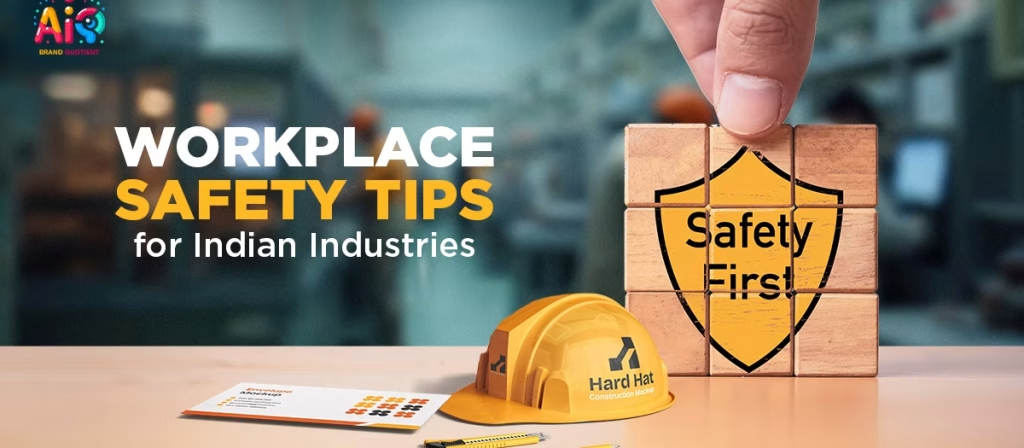
Workplace Safety Tips for Indian Industries

In a rapidly evolving industrial landscape like India’s, workplace safety has emerged as a non-negotiable priority. From manufacturing plants to construction sites, logistics hubs to IT campuses, ensuring the safety and well-being of workers is not just a regulatory requirement, it is a cornerstone of sustainable growth. Accidents, negligence, or the absence of a safety culture can have severe consequences, ranging from human suffering to financial losses and reputational damage. One of the most effective approaches to addressing these challenges is Safety Branding the process of making safety a visible, integral, and value-driven part of an organization’s identity. This article explores workplace safety tips specifically for Indian industries, combining practical strategies with branding-driven initiatives to build safer, smarter, and more engaged workplaces. Why Workplace Safety Matters in Indian Industries India’s industrial sector is diverse spanning textiles, automotive, chemicals, construction, IT, and more. Each industry carries its own risks: Construction faces hazards like falls, equipment mishandling, and electrocution. Manufacturing deals with heavy machinery, chemicals, and fire risks Logistics has challenges of road safety, lifting injuries, and fatigue. IT and offices may appear low risk but are prone to ergonomic injuries, electrical hazards, and even psychosocial risks. According to reports from the National Safety Council and the International Labour Organization, India witnesses thousands of workplace accidents annually. Many of these could be prevented with robust safety measures and consistent reinforcement of safe practices. This is where Industrial Safety Branding can create a transformative shift turning safety into an organizational identity rather than a mere compliance checkbox. What is Safety Branding? Safety Branding is about embedding safety into the culture and communication of an organization. It involves: Consistently displaying safety messages across workplaces. Creating strong visual cues like posters, digital displays, and signages. Aligning employee training and values with safety-first messaging. Celebrating safety achievements as part of brand storytelling. When safety becomes a recognizable part of the company’s brand identity, employees naturally associate it with pride, loyalty, and responsibility. This is particularly impactful in Indian industries where workforce diversity (languages, literacy levels, cultural backgrounds) demands clear, engaging, and repetitive safety communication. Top Workplace Safety Tips for Indian Industries 1. Conduct Regular Safety Audits Routine inspections identify potential hazards before they turn into accidents. Organizations should schedule monthly and quarterly audits for equipment, fire safety systems, and employee work practices. Using safety audit findings as part of Industrial Safety Branding like publishing a “Safety Scorecard” on notice boards can motivate teams to maintain high standards. 2. Train Employees Continuously Training should not stop after induction. Periodic workshops, drills, and refresher courses help employees stay updated with safety protocols. For Indian industries, multi-lingual training material ensures inclusivity. When these sessions are branded as “Safety Learning Days” or “Zero Harm Workshops,” they not only inform but also strengthen the safety-first identity. 3. Use Visual Branding for Safety Communication Human beings process visuals faster than text. Industries should use signages, infographics, floor markings, and branded safety posters across workplaces. Consistent use of company colors, slogans, or mascots in safety messages builds stronger recall. For example, a factory could use a mascot character wearing PPE (personal protective equipment) to remind workers in a friendly, non-intrusive way. 4. Prioritize PPE (Personal Protective Equipment) Mandatory helmets, gloves, masks, and protective shoes must be made accessible, comfortable, and well-branded. By adding the company logo or colors to PPE, organizations reinforce safety as part of their professional identity. This small step makes compliance more likely, as workers feel PPE is part of their team uniform rather than an external burden. 5. Celebrate Safety Milestones Acknowledging and rewarding safe behavior is essential. Indian companies can mark “X days without accidents” milestones with branded events or recognition programs. Giving badges, certificates, or featuring safety champions in newsletters builds pride and makes employees ambassadors of Safety Branding. 6. Leverage Technology for Safety Digital solutions like IoT-enabled sensors, AI-based monitoring systems, and mobile apps are transforming workplace safety in India. These tools can alert managers in real-time about hazards or near misses. Integrating technology into the company’s safety brand say, calling it “Smart Safety 360” or “TechSafe Initiative” emphasizes innovation and care. 7. Build Ergonomic Workplaces In industries like IT, finance, or BPOs, physical risks are often related to ergonomics bad posture, long screen times, and repetitive strain injuries. Providing ergonomic chairs, adjustable desks, and branded awareness campaigns on stretching exercises helps protect employees while reinforcing Industrial Safety Branding in office spaces. 8. Create Emergency Response Protocols Fire drills, evacuation plans, and first-aid training are essential. In India, where natural disasters like earthquakes or floods are also concerns, having branded safety handbooks and easy-to-spot signage ensures employees know what to do. Using simple, visual storytelling (infographics or even short, branded videos) is especially effective in multi-lingual workplaces. 9. Promote a Safety-First Culture Safety is not just the responsibility of a compliance officer it must be everyone’s job. Encouraging employees to report unsafe practices without fear of punishment, and building peer-to-peer safety networks, strengthens this culture. When leaders talk about safety in every town hall or team meeting, it becomes an inseparable part of organizational branding. 10. Involve Families in Safety Awareness A unique approach in Indian industries is extending safety communication to employees’ families. By sending branded newsletters, calendars, or even small campaigns home, companies remind workers that safety is about protecting their loved ones too. This emotional connection deepens commitment to safe practices. What an Industrial Safety Branding Benefits Businesses Enhanced Compliance: Proactive branding ensures safety rules are visible and followed. Reduced Accidents: Clear communication and cultural reinforcement minimize risks. Improved Productivity: Safe employees are more confident and efficient. Employee Retention: Workers feel valued when their safety is prioritized. Positive Reputation: A strong Industrial Safety Branding strategy positions a company as responsible and trustworthy an advantage with clients, investors, and regulators alike. Conclusion For Indian industries, workplace safety is more than just meeting legal requirements it’s about building a resilient, sustainable future. By combining traditional safety practices with innovative Safety Branding strategies, organizations can

How Commercial Safety Branding Reduces Risks and Builds Confidence
Safty Branding

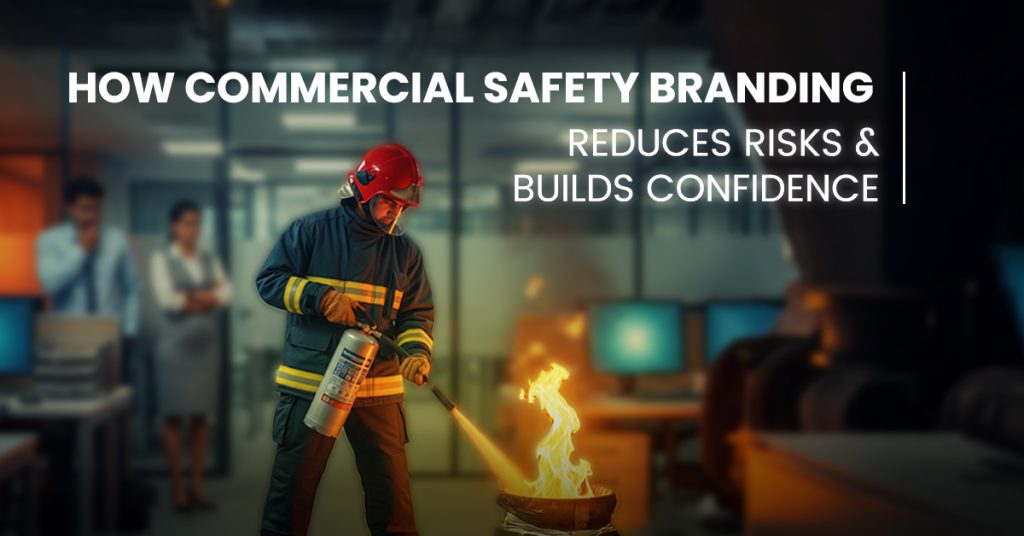
How Commercial Safety Branding Reduces Risks and Builds Confidence

When most people think of workplace accidents, they imagine machinery, chemical spills, and factory issues. But in fact, it is in offices, retail stores, and commercial buildings where we see other types of risks which although may go unnoticed are just as disruptive. A fall on a wet floor in the lobby, bad lighting in a stairway, or a worker which has strained a back at a badly designed workstation can cause injury, downtime and liability. Here is the good news that many in these categories are preventable. Through commercial safety branding we see an opportunity for companies to make safety a core element of what they stand for. Via creative communication which includes visual identifiers, signage, and employee directed videos  what was once a set of rules is transformed into a culture which in turn reduces risk and which builds confidence among employees and customers. Common Safety Risks in Commercial Spaces While different in that they are not as visible as those present in factories, commercial settings still present every day hazards:. Slips, trips, and falls: Wet floors, messy hallways, loose rugs, and uneven tiles are issues which in the past we have seen in offices and retail stores. Ergonomic injuries: Poorly fitted desks, uncomfortable chairs, or check out counters which put strain on your posture may cause health issues in the long term. Poor lighting: Wide open spaces, grand stairways, or large parking lots increase the risk of accidents and also instill a sense of unease in employees and visitors. Fire and emergency risks: Many commercial buildings have emergency plans which are on paper but they do not have visible or easy to see drill routines. Customer safety gaps: In retail which is a fact that at times we see products out of display, overstocked shelves, or unstable fixtures which in turns to customer safety and damage to brand image. These issues may be of a small scale individually, but they add up to large scale problems  lost productivity, increased insurance claims, and damage to our reputation. Why Commercial Safety Branding Matters Traditional safety measures, policy documents, compliance binders, or generic posters rarely inspire lasting attention. Employees skim them, and customers barely notice them. This is why commercial safety branding is so impactful: it makes safety visible, relatable, and embedded in everyday experiences. Visual cues and signage: Strategically put out, well thought out signs that grab attention right away. For example, a branded floor graphic which says “Watch Your Step” by a slippery entrance does better than a plain yellow sign. Employee-facing videos: Short tips on ergonomic issues and exit routes get across to employees better than in depth manuals. Consistent messaging: Safety messages we put out through our brand’s color scheme and tone of voice come across as authentic which in turn conveys that safety is a fundamental value to us not a box we check off. Through the integration of safety in to the fabric of the brand image organizations see to it that incidents are reduced and also they present a reliable image to their employees, clients and customers. Bringing Industry Experience to Commercial Settings At AIQ Brand Quotient we have dedicated ourselves for years to work with manufacturing and heavy industry clients in the development of safety communication which we see through to success. We are strong in taking what we have proven to do in plant and industrial settings and applying it to corporate offices and retail which while different in risk present the same challenge of awareness and trust. Here’s what we deliver:   Creative Design: In the design of our visual elements from large eye catching posters to floor graphics we have focused on clear communication which at the same time does not break the professional or retail theme. Content Development: We put together employee handbooks, onboarding kits, and short training videos which break down complex safety procedures into easy terms. Training Services: In workshops, e-learning modules, and interactive campaigns we help to instill safety practices into employees which goes beyond just one time notices. By means of a creative and practical approach which also includes compliance expertise AIQ BQ has succeeded to make safety a reality in the workplace. Conclusion: Partner up with AIQ BQ to integrate safety into your brand Offices and retail spaces may have different sets of hazards from what is seen in industrial plants but their risks are very much present and may greatly affect people and reputation. Through commercial safety branding companies may prevent incidents, improve workplace culture and prove to stakeholders that safety is a priority in what we do. At AIQ BQ we put together creative design, content, and training expertise to bring safety branding to life in your workplace. We take safety beyond a check box issue to a visible and trusted element of your brand identity. Ready to reduce risks and build confidence? Join AIQ BQ today and we can transform your commercial spaces into safer, smarter, and more trusted environments.

industrial safety branding-AIQ BQ
Safty Branding

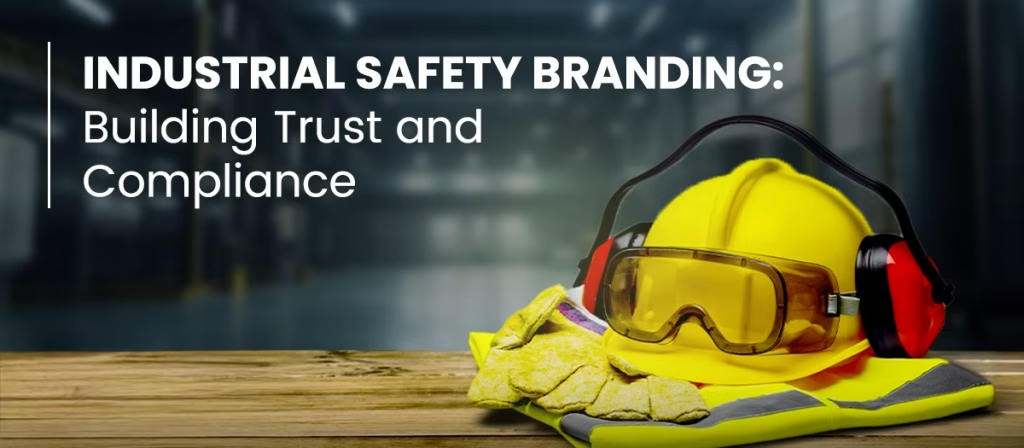
Industrial Safety Branding: Building Trust and Compliance

In the field of manufacturing and heavy industry safety is a base element of trust between management, employees and stakeholders it is also a regulatory requirement. Industrial settings are complex which include large scale machinery, very large teams, and very strict regulatory structures. In such settings Safety Branding plays a key role. While many in executive roles think of safety in terms of policies, procedures and training what is in fact very true is that visual communication and brand consistency are very much of the essence. Safety Branding is the strategic use of colour, symbols, signs and communication tools to make safety issues very visible, memorable and put into action at every point of interaction within the organization. Unlike the run of the mill safety announcements which tend to go in one ear and out the other we have seen that a structured Safety Branding approach which puts in place a recognizable visual identity for safety that employees immediately pick up on and react to. This identity is not only about meeting OSHA and ANSI requirements but also in creating a culture which instils trust, professionalism and care in what we do. Why Consistent Safety Branding Matters for Industrial Compliance Executives of manufacturing and heavy industries see that compliance is a must. Regulators, auditors, and certification bodies put in place very strict safety rules. But compliance goes beyond putting up exit signs and warning labels. What we have with true compliance is human behaviour change which is a result of consistent message delivery and reinforcement. When employees see the same elements of design the colours, the shapes, and the tone of voice in all safety communications the company is associating safety with clarity and reliability. A company that puts into their Safety Branding is one which shows that it values lives, respects standards, and is very much into the wellbeing of its workforce. Over time that consistency reduces confusion, improves compliance and in turn improves overall safety performance. In the absence of clear Safety Branding, signs become clotted, we see employees trying to make out what which message is which from mixed signals and in the end safety info doesn’t pack the punch it should. As for heavy industry executives the issue is not if at all to put money into safety communication but if that which they are putting out is strong enough to change behaviour. This is just what Safety Branding Companies and Safety Branding Agencies do best. The Psychology Behind Colours, Symbols, and Visual Identity in Safety Branding In fields which every second is a matter of life and death visual communication is what you turn to. We see that humans process visuals at a much faster rate than text which in high-risk settings is a great asset. Safety Branding plays with the psychology of colours and symbols to put across risk, warning and safe practices briefly. Colours are a universal element in safety. OSHA and ANSI standards report to put red at the place of fire equipment and danger, yellow for caution, green for safe conditions, and blue for what must be done. These colour codes are not which they go out of the blue; they are based in human psychology. Red is tied to urgency and alert, and yellow brings to notice hazards before they grow. By putting out the same colours in the same places in the workplace Safety Branding we see that messages are not only in compliance but also very psychological in their effect. Symbols add that extra dimension of clarity. We see that a well thought out symbol can put across the message in many languages, to many literate and illiterate audiences, and across cultures. In global manufacturing which is home to multilingual teams we see visual symbols as the common language for safety. And when these symbols are put into a brand’s framework which includes in design, placement, and messaging what you get is a more reliable safety culture. Safety Branding as a Driver of Employee Trust Safety is integral to our brand identity which we have designed that into the core of what we do. This shift fosters trust. In a workplace that has strong Safety Branding we see transparency, consistency and accountability. We note that the company’s focus is on more than just output and profit but also very much on protection of its people. In time this instils trust which in turn breeds loyalty. Teams become more engaged, compliance rises as a result, and we see a drop in incident reports. Trust is also built out with respect to external parties. Our clients, regulators, and investors see in which companies that have a professional Safety Branding do well in terms of responsibility and reliability. That in turn improves reputation for these companies and we see a long-term competitive advantage in the manufacturing and heavy industry fields. The Role of OSHA and ANSI Standards in Safety Branding In the discussion of Safety Branding, it is important to look at the regulatory structures in place. OSHA (Occupational Safety and Health Administration) in the U.S. and ANSI (American National Standards Institute) have put forth specific standards for safety signs, colours, and symbols. These standards’ goal is to bring about consistency across all industries which in turn allows workers to identify hazards the same way no matter what the job site. OSHA has in place certain colour codes which include red for fire related hazards and emergency stops, yellow for physical hazards like tripping or falling and green for first aid and safe conditions. Also, ANSI provides design guidelines which include how symbols should be put together, what contrast is best maintained, and which areas signs should be put in for maximum visibility. For which many companies have as a legal and ethical duty to see to it that their executives comply with these standards. That said, compliance is not enough. The standards set the stage, but Safety Branding puts the company’s identity on that stage. By including OSHA and

AI for Crisis Management in Social Media: Responding Effectively
Safty Branding

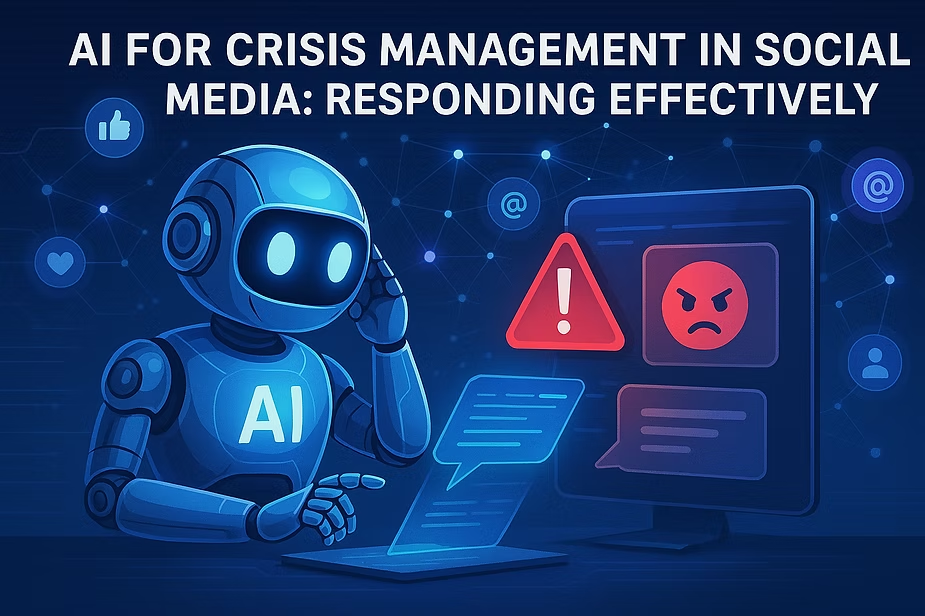
AI for Crisis Management in Social Media: Responding Effectively

In this day and age where it’s so tough to really say what is and isn’t a crisis sometimes anymore, social media has really become the superstar when it comes to crisis handling. Whether it’s a brand reputation issue, a customer service disaster, or a PR scandal, social media amplifies crises faster than ever. Organizations really have to have an awesome set of responses when it comes to big problems. Now, thanks to super technology called AI, companies can actively pick issues up, react to them fast and address them right away. Tools driven by artificial intelligence help brands keep an eye on conversations, catch trouble ahead of time and respond really well. This blog explores the significance of AI in social media crisis management and how businesses can leverage it to enhance their response strategies. 1. Understanding Social Media Crises A social media crisis occurs when negative sentiment or misinformation spreads rapidly online, damaging an organization’s reputation. These crises can stem from various sources, including customer complaints, misinformation, security breaches, or controversial company actions. Common Types of Social Media Crises Brand Reputation Issues: Negative reviews, viral complaints, or scandals. Cybersecurity Threats: Data breaches, phishing attacks, or hacking incidents. Misinformation & Fake News: False narratives that spread rapidly. Employee Misconduct: Internal issues that become public. Product or Service Failures: Faulty products leading to public backlash. These crises can severely impact a brand’s trust and credibility, making it essential to act swiftly and strategically. 2. The Role of AI in Crisis Detection AI is really super important for spotting when things might get tough before they get rough. It’s kind of like getting an early alert system that picks up early signs of something that might not be right. With machine learning magic and big data powers, AI systems practically never sleep now and can monitor conversations on social media around the clock for sure. How AI Detects Potential Crises Once a crisis is detected, AI helps manage the response efficiently. Social Listening Tools: AI-powered tools like Brandwatch and Sprinklr scan social media for mentions, keywords, and sentiment changes. Sentiment Analysis: AI analyzes who people are reacting to and detecting shifts toward different things on the public radar. Real-Time Alerts: AI platforms using artificial intelligence send out alerts instantly when issues raid the radar, and it allows brands to take care of business right away. It’s all about being nimble and getting to business fast when something goes south. With the help of AI, companies can really put themselves ahead because before most problems get big, they can nip troubles in the bud. 3. AI-Driven Response Management How AI Enhances Crisis Response Automated Response Systems: Chat bots powered by all that futuristic AI alongside automation tools for customer service can get response to really big numbers of pesky queries really quick, along and whipping out updates at lightning speed. Personalized Responses: AI tailors reply based on user sentiment and previous interactions, making responses more human-like and empathetic. Case Studies: Starbucks and Nike use tools powered by artificial intelligence so that when stuff happens in their relationship with customers—whether that’s a problem with a product, a complaint about service, or just anything happening—brand managers can respond lightning quick. They also base their response reliably on big batches of data. Let’s say it another way. Starbucks and Nike have clever AI tools which help companies connect very quickly with customers when things go sour and use heaps of data to respond effectively. It really helps them handle crises so well and they can come up with quick solutions to remake upset customers feeling cradled back into a cozy warm hug. All together they feel much better and happier. source: 4. Enhancing Communication Strategies with AI AI also works hard to make communication better by closely studying how people react. And then it fine tunes the message based on that feedback to make it even more effective. AI-Powered Content Creation: AI tools like Jasper and Copy.ai are great at writing for brands – crafting messages that feel fresh and fit in an urgent moment. It helps them to speak powerfully and sensitively to audiences whenever sanity is off kilter. Audience Reaction Analysis: AI evaluates how messages are received and recommends adjustments. Real-Time Strategy Adjustments: AI monitors engagement and suggests modifications for better communication. 5. Predictive Analytics in Crisis Management Predictive analytics let companies see big storms coming before they knock over their barn doors. AI Forecasting: Machine learning predicts crisis trends based on past data. Data-Driven Proactive Measures: AI helps brands prepare responses before issues escalate. Learning from Past Crises: AI evaluates past crisis management strategies to refine future responses. 6. Ethical Considerations in AI Usage Sure, while AI is powerful technology, it’s important to consider the ethics as well and think about how we’re going to use it properly. Transparency in AI Decision-Making: Businesses need to be totally up front about how they use AI to detect and react to crises. Bias in AI Algorithms: AI systems must be monitored for fairness and accuracy. Balancing Automation with Human Oversight: AI should assist, not replace, human crisis management teams. 7. Challenges of Implementing AI in Crisis Management Technical Limitations & Data Privacy: AI requires vast amounts of data, raising privacy limitations. Resistance to Change: Organizations often find it hard to mix artificial intelligence into their plans for dealing with crises. Ensuring AI Accuracy: AI predictions must be reliable to avoid false alarms. 8. Future Trends in AI for Crisis Management AI technology is constantly evolving, and it is opening up new opportunities for crisis management every single day. AI Innovations: Tools of AI in the future are going to be much, much more intelligent and knowing also about handling crises. Detect such a crisis and responding with a level of accuracy that is well beyond today. Social Media’s Evolving Role: As social platforms evolve; AI will become more sophisticated in handling crises. Predictions for AI Advancements: AI is going to really step up

AI-Powered Social Media Ads: Better Targeting, Higher Returns
Safty Branding

AI-Powered Social Media Ads: Better Targeting, Higher Returns

Social media advertising has undergone a significant transformation over the years. Today, brands can reach exactly the right folks with great precision and can go way beyond just splashy banners and focused ads campaigns have come a long way. As digital marketing springs up with fresh new leaves, AI is definitely stepping into the spotlight as a big helper. It really helps make ads hitting people exactly where they’re at far more effective, it really grabs people’s attention in new and exciting ways, and most of all it pumps up the ROI profits per dollar spent to us marketers to new levels. In today’s competitive digital landscape, precise audience targeting is crucial for businesses. Using ads powered by AI, businesses can wade through mountains of information and predict how people react. They also deliver messages that are just right for each user. This post digs deep into how Artificial Intelligence makes ads that much smarter and more targeted on social media. You’ll find out the benefits and also learn great tips for smartly implementing AI to heighten the impact of ads on social networking sites. 1. Understanding AI in Social Media Advertising What is AI, and How Does It Impact Digital Marketing?  AI refers to the simulation of human intelligence in machines that can analyze data, recognize patterns, and make decisions with minimal human intervention. In digital marketing, AI is revolutionizing social media ads by automating processes, enhancing targeting accuracy, and improving campaign performance.  Key Technologies Driving AI in Social Media Ads Machine Learning (ML): AI algorithms study what people do on screens, looking at patterns and figuring out how to serve ads right away that will appeal to them the most. Big Data Analytics: AI processes large datasets to understand consumer preferences and refine targeting strategies. Natural Language Processing (NLP): AI interprets user-generated content, such as comments and reviews, to gauge sentiment and optimize ad messaging. Computer Vision: AI-powered tools analyze images and videos to determine the most engaging content for social media campaigns. 2. Importance of Targeting in Social Media Campaigns Why Targeting Matters in Advertising  Targeting means making sure that the right message lands with the right people at the perfect moment, no room for guessing. If brands don’t target ads properly, they just waste money on people who are unlikely to buy their stuff and that means lower profit compared to what they actually got. Traditional Targeting vs. AI-Driven Targeting  Aspect Traditional Targeting AI-Driven Targeting Segmentation Demographic-based segmentation Behavioral and intent-based segmentation Ad Optimization Manual ad optimization Real-time, automated ad optimization Audience Modeling Generalized audience personas Hyper-personalized, predictive audience modeling 3. How AI Enhances Targeting Capabilities  Data Collection & Audience Segmentation  So, AI does yeoman service by gathering data from all sorts of sources nowadays, from people’s posts all over social media, how they visit websites and which things they buy. By doing all this, it also gets really good at dividing up people into targeted groups and knowing them well. Predictive Analytics for Consumer Behavior  AI predicts future actions based on past behavior, allowing marketers to deliver highly relevant ads. Predictive models help brands divine what kind of goods or services people are going to want. This can make ads more noticeable, so people stop paying them less attention and actually use them more. 4. Case Studies: Successful AI-Powered Social Media Ads Case Study 1: Netflix’s AI-Driven Ad Personalization  Netflix uses AI to analyze viewing habits and suggest content tailored to individual preferences. This strategy extends to their social media ads, where AI ensures that users see highly relevant content promotions. Case Study 2: Coca-Cola’s AI-Powered Social Listening Coca-Cola uses AI to read everything, even when folks tweet about soda. They use amazing web analysis to put together great ads that really hit home with customers. Benefits of AI-Powered Targeting Increased Precision: The amazing thing about AI is that it gets really good at knowing which ads to send to people who will really like them. We’re always trying to make sure it reaches the right folks. Higher Engagement & Conversions: When ads are personalized they really get noticed and people tend to click on them and buy more too. Cost Efficiency: Automation through AI gets creative work done better and faster while cutting out waste and improving results. Real-Time Adaptation: AI is constantly evolving its learning and flexibility, making the marketing campaigns ever more dynamic and good at hitting their targets. Think of it like Teen Vogue magazine gathering all kinds of latest and relevant styles on the runways and coordinating these with style tips for girls, that’s how AI learns and adapts faster than ever. 5. Challenges and Considerations Potential Pitfalls of AI in Targeting  Over-reliance on AI can limit creativity and human intuition. Sometimes those computer brains called AI algorithms can have trouble understanding things right and as a result, they may wrongly target people. Ethical Considerations & Data Privacy Ads which use new AI algorithms are cracking and collecting a lot of personal information and it’s getting a lot of people worried about privacy and how this kind of data is being used. Companies do need to follow rules like GDPR and make sure using AI is not only legal but also ethical too. 6. Future Trends in AI and Social Media Advertising AI-Powered Chatbots for Ad Engagement: Brands will use AI chatbots to provide instant interaction with potential customers. Voice & Visual Search Integration: AI is really going to start pumping up ads especially for when people use voice searches and also for things like image recognition. It really helps a lot to make ads much easier to find and much more likely to be seen. Hyper-Personalization: AI will refine real-time personalized ad experiences based on micro-moments and user behavior. Best Practices for Implementing AI in Social Media Ads  Leverage AI for Dynamic Ad Creation: Use AI tools to generate personalized ad creatives in real-time. Combine AI Insights with Human Creativity: While AI improves targeting though, human touch really does wonders for good storytelling and that human

How Businesses Can Automate Social Media Engagement with AI
Safty Branding

How Businesses Can Automate Social Media Engagement with AI

In this digital age, the way businesses succeed really hinges on engaging well with people on social platforms. Sure, maintaining that kind of vibrant and engaged social presence takes up a whole lot of time and effort and that’s why automating regular post publishing and interaction becomes an essential strategy. Artificial Intelligence (AI) is transforming social media interactions by automating engagement, enhancing customer interactions, and optimizing brand communication. 1. Understanding AI in Social Media Definition of AI and Its Applications in Social Media.  AI in social media refers to the use of machine learning algorithms, natural language processing (NLP), and automation tools to manage interactions, schedule posts, analyze engagement metrics, and personalize content. Brief History of AI Development in Social Media Early automation tools focused on scheduling and analytics. Advancements in AI introduced chatbots, sentiment analysis, and content recommendations. Modern AI-driven tools enable real-time engagement and intelligent automation. Benefits of Automating Social Media Engagement 1. Increased Efficiency and Time Savings  AI automates those pesky tasks like scheduling posts and dealing with common questions and repetitive chores. Businesses can focus on strategy rather than manual execution. 2. Enhanced Customer Interaction and Satisfaction AI-powered chatbots provide instant responses, improving user experience. Real-time engagement fosters stronger brand-consumer relationships. 3. Consistency in Brand Messaging and Presence Automated posting keeps the whole message consistent and ensures we’re active regularly. AI helps maintain uniform engagement across multiple platforms. 2. Key AI Tools for Social Media Engagement  Overview of Popular AI Tools Available for Businesses  Chatbots Virtual Assistants Automate responses and customer support. Tools that harness artificial intelligence (AI) are now doing captioning, inscriptions for posts, and even sketching out great ideas for Instagram and Facebook content—they’re totally smoothing out creation efforts too. Social Listening Sentiment Analysis Tools Analyze audience reactions. Posting automated schedule through certain platforms aims to time posts so results show up more often and then it’s really in view of more people. Features and Functionalities of These Tools AI-driven analytics provide insights into engagement patterns. Smart recommendations help refine content strategy. Predictive analytics optimize ad targeting and budget allocation. 3. Implementing AI Tools in Social Media Strategy Steps to Integrate AI Tools into Existing Social Media Strategies: Identify key pain points in manual engagement. Choose AI tools that align with business goals. Test automation features to ensure seamless integration. Monitor performance and adjust strategies as needed. Best Practices for Using AI to Enhance Engagement Use AI-generated insights to refine content strategies. Blend automation with human interactions for a personalized touch. Regularly review AI-generated interactions to ensure quality engagement. 4. Personalization through AI How AI Can Analyze User Data to Create Personalized Content. AI segments audiences based on behavior, preferences, and interactions. Personalized recommendations drive higher engagement rates. Examples of Successful Personalized Engagement Strategies  AI-driven email campaigns tailored to user interests. Dynamic social media ads customized for different audience segments. Chatbots delivering personalized product recommendations. 5. Monitoring and Analyzing Engagement Metrics  Importance of Tracking Engagement Metrics  Helps measure campaign effectiveness and audience sentiment. Identifies areas for improvement in content strategy. How AI Can Assist in Analyzing Data for Better Decision-Making AI-powered dashboards track engagement trends in real time. Predictive analytics forecast future content performance. Sentiment analysis tools gauge audience perception. 6. Challenges and Considerations  Potential Challenges Businesses May Face When Implementing AI  High initial investment in AI tools. Learning curve associated with AI integration. Ethical Considerations and Maintaining a Human Touch in Engagement.  Over-reliance on automation can feel impersonal. Businesses must balance AI efficiency with authentic human interactions. 7. Future Trends in AI and Social Media Engagement  Predictions for the Evolution of AI in Social Media.  AI will further refine real-time engagement capabilities. Integration of AI with augmented reality (AR) and virtual reality (VR) for interactive experiences. Emerging Technologies That May Influence Future Engagement Strategies  Voice search optimization in AI-driven social media tools. AI-powered video content generation for personalized engagement. Increased automation in influencer marketing strategies. Conclusion With tools powered by artificial intelligence, businesses are really shaking things up when it comes to interacting with their customers. Boasting talk of technology, these interactive elements are totally changing the game. By automating those dull routine tasks, AI carries things a step further and makes them super personal, sending key information straight to customers’ email inbox. With AI in play, companies can really spice things up and do better business. Things just get a lot cooler and more exciting. Communication directly into the inbox is such a personalized touch that just makes the company even more special. Business definitely improves all the way up and down the value chain when it’s like this. Making life for customers easier and more exciting at the same time, getting things done more efficiently ensures higher profitability. At AiQ Brand Quotient, we specialize in AI-driven social media solutions that help businesses automate engagement, enhance customer interactions, and achieve higher ROI. Want to supercharge your social media strategy with AI? Contact us today!

AI Social Listening Tools: Understanding Customer Sentiment
Safty Branding

AI Social Listening Tools: Understanding Customer Sentiment

Customer sentiments are on the top of the agenda of companies who want to keep a good brand reputation and make a long relationship with the customers. Since there are concerns of the quantity of online dialogue unfolding across social media, forums and review boards, corporate requires a fast method to monitor and glean customer sentiment. That’s the entry point of ai-enabled social listening tools. These sophisticated tools use artificial intelligence to monitor, interpret, and examine online conversation, which can give companies rich information about customer sentiment. In this blog, we will explore how AI social listening tools help businesses understand customer sentiment and enhance their marketing strategies. I. What is AI Social Listening? Definition of AI Social Listening and Its Components AI social listening is the application of artificial intelligence technologies to surveil, process, and understand online discourse about a brand, industry, or subject. Compared to traditional social listening approaches, AI-based tools automate the whole process so the result can be obtained with better accuracy and efficiency in real-time. How AI Enhances Traditional Social Listening Methods By means of AI-based applications, significant amounts of data can be analyzed in real time and trends can therefore be monitored in a more effective manner. Natural language processing (NLP) allows AI applications to interpret context, sentiment, and the meaning of customer dialogue. Machine learning algorithms progressively refine sentiment analysis, by learning from patterns in the data. II. The Importance of Customer Sentiment Analysis Why Customer Sentiment Matters Customer sentiment analysis includes the evaluation and labeling of expressed emotions in customer feedback, i.e., positive, neutral or negative sentiment. This analysis can help companies understand the public image and make calculated decisions. Impact on Brand Reputation and Customer Loyalty Brand Reputation Management: Detection of negative emotions at the earliest stages assists companies in acting when issues start to grow. Customer Loyalty & Retention: Understanding customer emotions helps brands foster stronger relationships. Product & Service Enhancement: Customer comments give data with which to develop the offerings for real users. Key Features of AI Social Listening Tools Essential Features for Effective Sentiment Analysis Real-Time Monitoring – Monitors mentions and conversations as they arise. Sentiment Scoring – Attempts to determine the emotional state of customer communication (i.e. Trend Analysis – Identifies emerging patterns and topics relevant to the brand. Competitor Benchmarking – Compares sentiment metrics against competitors. Contribution to Customer Sentiment Analysis With NLP, AI-driven tools can decode slang, emojis and use case-based context in customer dialogues. Machine learning allows for continually increasing sentiment accuracy and data intelligence. III. How AI Enhances Sentiment Analysis Use of Machine Learning and NLP ML algorithm leads to refinement of sentiment classification as it goes along and outcome accuracy is enhanced. NLP facilitates the ability of AI to understand the real intention of customer messages, even in more intricate situations. Case Studies Demonstrating AI’s Effectiveness Retail Industry: AI social listening determined product complaints early and this resulted to a 20% uptick in customer satisfaction. Finance Sector: To achieve this personalized customer care, an institution of banking used AI sentiment analysis and increased customer retention rate by 15%. IV. Applications of AI Social Listening Tools Industries Benefiting from AI Social Listening Retail – Monitoring customer experience with new products and marketing activities. Healthcare – Monitors patient feedback for service improvements. Financial Services – Enables customer service through early detection of changes in sentiment. Business Use Cases Marketing: AI insights help brands craft targeted campaigns. Product Development: Companies refine offerings based on consumer sentiment. Customer Service: AI-powered chatbots and support teams proactively address customer concerns. V. Challenges in AI Social Listening Common Challenges Accuracy of Sentiment Interpretation: AI may misinterpret sarcasm, slang, or ambiguous language (which soon would be rectified considering prevention Integration with Existing Tools: Some businesses struggle to integrate AI listening tools with their current CRM and marketing platforms. Overcoming These Challenges Enhancing sentiment accuracy via use of AI-based tools with sophisticated NLP capabilities. Ensuring compliance with data protection laws. Choosing The use of AI solutions with straightforward integrations with other business applications. VI. Best Practices for Implementing AI Social Listening Tools Selecting and Integrating AI Social Listening Tools Define Clear Objectives – Understand what insights you aim to gain. Select the Right Tool – Identify AI listening tools to meet your business needs. Integrate with Other Data Sources – Integrate AI information with CRM and analytics systems. Regularly Monitor Fine-tune – Iteratively adjust your social listening approach from emerging AI-derived insights. Maximizing Effectiveness Train teams to understand and respond to AI-based trend predictions. Integrate AI processing with human intelligence to reliably parse sentiment. Use AI findings to refine customer experience strategies and engagement tactics. VII. Future Trends in AI Social Listening Emerging Trends and Technologies AI-Powered Predictive Analytics: AI will anticipate customer trends before they happen. Voice & Video Sentiment Analysis: Advanced AI tools will analyze sentiment in video content and voice interactions. Ethical AI in Social Listening: Greater attention to responsible AI application to avoid sentiment analysis biases. Future Impact on Customer Sentiment Analysis Companies will be better equipped with the ability to understand the customer’s emotional and behavioral characteristics, etc. AI-driven recommendations will personalize brand interactions further. AI will help to solve real-time crisis management by using automated sentiment-detection systems. VIII. Conclusion AI social listening tools have become indispensable for businesses looking to understand and act on customer sentiment. These instruments enable brands to track real-time discussion, take action to communicate with the audience and build brand reputation. Through the application of AI-based insights, companies have the ability to take steps to build better customer relationships, refine their market approaches, and ultimately be successful in business. At AiQ Brand Quotient, we specialize in AI-powered social media marketing solutions, helping businesses leverage AI social listening for deeper customer insights. Want to understand customer sentiment better? Contact us today!

Scroll to Top