Author name: aiQbQ@LOgIn

AI Social Listening Tools: Understanding Customer Sentiment
Safty Branding

How AI Boosts Social Media ROI for Businesses

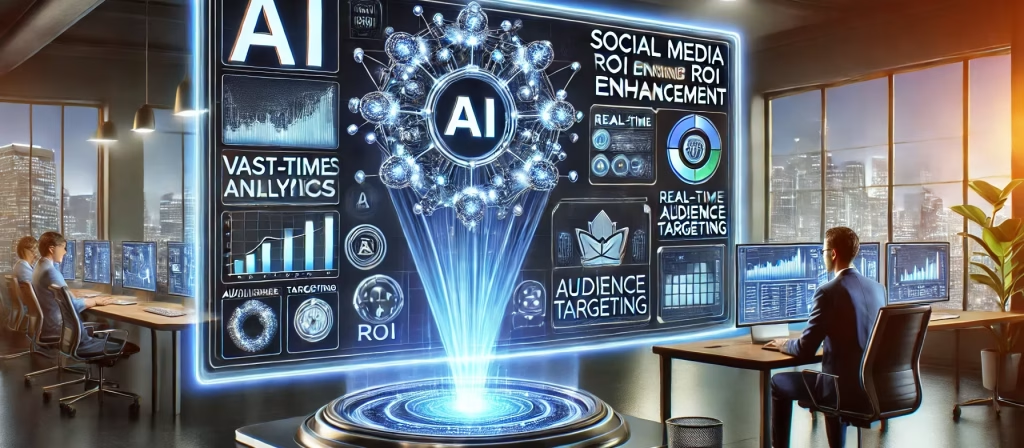
Social media is now a primary means by which businesses engage audiences, increase brand visibility and generate sales. Nonetheless, the generation of a high return on investment (ROI) from social media marketing calls for strategic planning and optimization. This is where artificial intelligence (AI) plays a crucial role. AI is revolutionizing social media strategies by automating processes, analyzing vast amounts of data, and enhancing audience engagement. Businesses using AI to help social media marketing will be more efficient, better able to optimize ad spend and gain Return On Investment. In this blog, we will explore how AI can boost social media ROI for businesses. Also read our blog on “The Role of AI in Scaling Digital Marketing Strategies for Businesses“ Understanding Social Media ROI What is Social Media ROI? Social media ROI is defined as the amount of value created from social media activity over the resource devoted to it. It is a tool that allows companies to assess whether their social media activities are producing real results (e.g., revenue, leads, brand awareness). Key Metrics to Measure ROI Engagement Rate – Captures audience activity around the content (likes, comments, reposts). Conversion Rate – Reveals the actions of the users, for example, registration or purchase. Customer Acquisition Cost (CAC) – Evaluates how much it costs to acquire a customer through social media. Brand Awareness Metrics – Assesses reach, impressions, and follower growth. Revenue Generated – Measures direct sales attributed to social media efforts. Importance of Tracking ROI Ensures marketing efforts align with business goals. Identifies high-performing strategies and areas for improvement. Helps allocate budgets effectively for maximum impact. The Role of AI in Social Media Marketing AI Technologies Used in Social Media Machine Learning AI algorithms analyze user behavior to predict trends. Natural Language Processing (NLP) Enables sentiment analysis and chatbot interactions. Computer Vision Recognizes images and videos for better content targeting. How AI Analyzes Data and Consumer Behavior AI works with big data to identify patterns in user behavior. Predictive analytics forecasts engagement levels for different content types. AI tools identify peak posting times and optimal content formats. AI’s Impact on Content Creation and Curation Automates content recommendations based on audience preferences. Enhances content personalization to boost engagement. AI-generated captions and hashtags improve visibility. Enhancing Target Audience Engagement 1. AI-Driven Tools for Audience Segmentation AI categorizes users based on demographics, interests, and behaviors. Predictive analytics suggests content that resonates with specific segments. 2. Personalization of Content with AI AI-driven recommendations provide tailored content for users. Dynamic content adapts to user preferences in real-time. 3. Case Study: Improved Engagement Through AI One retail brand used AI-based audience segmentation and secured a 40% uplift in engagement rates by targeting individuals with highly relevant content to relevant customer segments. Optimizing Ad Spend with AI AI Algorithms for Ad Optimization AI dynamically optimizes bids in real time to maximize ad effectiveness. Automated A/B testing determines the most effective ad creatives. Predictive Analytics for Better Ad Targeting AI makes a prediction of which users are most likely to convert, given behavior in the past. Reduces ad wastage by refining audience targeting strategies. Success Story: Reduced Costs & Increased ROI A tech startup employed AI-based ad targeting and achieved a 25% reduction of cost per acquisition (CPA) and 30% of conversions. Automating Customer Interactions AI-Powered Chatbots & Virtual Assistants Provide instant responses to customer inquiries. Enhance user experience through conversational AI. Benefits of Automation for Customer Service Reduces response time and improves customer satisfaction. Frees up human agents to handle complex queries. Impact on Customer Retention AI-driven interactions build stronger customer relationships. Personalized responses improve loyalty and trust. Content Strategy and AI AI Tools for Content Generation & Scheduling AI generates blog posts, captions, and video scripts. Automated scheduling ensures posts go live at optimal times. Analyzing Content Performance with AI AI tracks engagement and recommends content improvements. Sentiment analysis measures audience reactions. Leveraging AI for Content Marketing AI insights help brands craft compelling, data-driven content. Automated recommendations optimize posting frequency and topics. Measuring Success: AI Analytics Tools AI-Powered Social Media Analytics Tools Hootsuite Insights – Provides AI-driven sentiment analysis. Sprout Social – Uses AI to analyze social media trends. Brand watch – Tracks brand mentions and audience sentiments. How AI Provides Actionable Insights Identifies successful content themes. Measures ROI with precision. Offers recommendations for future strategies. Data-Driven Decision-Making AI helps marketers refine campaigns based on real-time data. Improves forecasting accuracy for better planning. Challenges and Considerations Common Challenges in AI Integration Complexity in adopting AI-driven tools. Need for skilled professionals to manage AI systems. High initial investment costs. Ethical Considerations & Data Privacy Ensuring AI-driven marketing adheres to privacy regulations. Avoiding biased AI algorithms that misrepresent user groups. Overcoming AI Challenges Investing in AI training and expertise. Selecting ethical AI tools with transparent data policies. Conclusion AI is changing social media marketing, allowing companies to achieve greater ROI, better engagement, and superior ad targeting. Across audience profiling, content production, and automated customer interactions, AI is the answer to a more optimal and a better social media approach. Maximize Your Social Media ROI with AI! At AiQ Brand Quotient, we harness the power of AI-driven social media marketing to optimize engagement, enhance targeting, and deliver data-backed results. From automated content strategies to intelligent audience insights, our AI-powered approach ensures every marketing dollar is spent efficiently. Ready to unlock the full potential of AI in social media? Let’s boost your brand’s visibility and ROI together! Contact us today!
AI-Optimized Budgeting for PPC Campaigns
Safty Branding

AI-Optimized Budgeting for PPC Campaigns

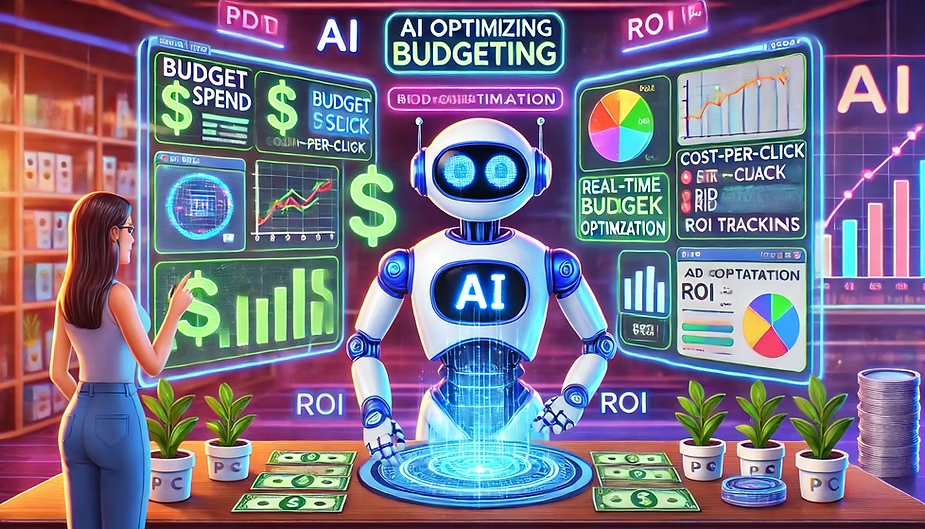
Pay-Per-Click (PPC) campaigns are vital in today’s rapidly evolving digital marketing space for companies seeking to bring traffic, generate leads and drive conversions. However, inefficient budget allocation can lead to wasted ad spend and suboptimal campaign performance. This is where AI-powered budgeting solutions come into play. Artificial Intelligence (AI) is transforming PPC campaign management through automation of budgeting, bidding, and future performance trend forecasting, etc. Companies using AI for PPC budgeting can achieve the best possible relative return on investment (ROI) as well as reduce human effort. On this blog, we discuss how AI can change the rules of the game for PPC budgeting to help companies get more marketing results. Also read our blog on “Why AI is Essential for PPC Campaign Success“ Understanding PPC Budgeting What is PPC Budgeting? PPC budgeting refers to the process of allocating a set amount of money to online ad campaigns across platforms like Google Ads, Bing Ads, and social media advertising. Key Components of a Successful PPC Budget Daily and Monthly Spend Limits Defining how much to spend on a campaign over a period. Bid Strategy Choosing between manual, automated, or AI-driven bidding methods. Ad Group and Keyword Budgeting – Assigning budgeting to performing ad groups and keywords. A/B Testing and Performance Analysis Continuously evaluating ad creatives and targeting strategies. Challenges in Traditional PPC Budgeting Manual budget adjustments are time-consuming. Inefficiencies due to human error and inaccurate forecasting. Difficulty in predicting consumer behavior and seasonal trends. Narrow capacity to react to actual real-time fluctuation in market environment. The Role of AI in PPC Campaigns How AI Transforms PPC Management AI utilizes machine learning algorithms and predictive analytics to optimize PPC budgets. As it automates decision making, eliminates waste, and continuously learns from data to improve campaign performance. AI-Driven Data Analysis for Budgeting Real-Time Data Processing Artificial intelligence determines these enormous datasets in real-time to best manage costs. Performance Forecasting Machine learning models predict campaign success based on past performance. Bid Automation AI dynamically adjusts bids to maximize conversions while minimizing costs. AI Tools Used in PPC Campaigns Google’s Smart Bidding Uses AI to adjust bids based on the likelihood of conversion. Adzooma – Automates PPC management and provides optimization suggestions. Optmyzr-AI-powered bid management app which automates bid adjustments and performance monitoring. SEMrush PPC Toolkit Helps analyze competitors’ PPC strategies and optimize ad spend. Benefits of AI-Optimized Budgeting Budget Allocation Effectiveness -AI guarantees efficient budget allocation to performant ads and relevant keywords. Increased Accuracy – AI mitigates human mistakes and improves application-based decision making. Adjustments – AI dynamically adjusts budgets in real-time to the performance metrics of a campaign. Better ROI By optimizing ad spend, businesses achieve higher returns at a lower cost. Automated PPC Budget Allocation What is Automated Budget Allocation? Use of automated budget allocation exploits the power of AI algorithms, which determine how best to allocate money for different ad campaigns. It takes into account historical information, competitor knowledge, and user activities in order that spend can be optimized. How Automation Streamlines Budgeting AI eliminates guesswork and continuously refines budget distribution. It prevents overspending or underspending on underperforming campaigns. AI-driven suggestions enhance bid strategies for more effective cost-per-click (CPC) control. Case Study: AI-Driven PPC Success An e-commerce giant with an AI-driven budgeting system ended up with a 30% rise in conversions, coupled with a 20% cut in ad costs. The AI application adaptively redistributed funds to the best-performing campaigns and resulted in greatly improved ROI. Key Features of AI-Powered Budgeting Tools Essential Features to Look For: Machine Learning Predictive Analytics Ability to learn from past data and forecast trends. User-Friendly Dashboard – Easy-to-navigate interface for campaign monitoring. Integration with Ad Platforms Compatibility with Google Ads, Facebook Ads, and more. Automated Bid Adjustments AI should optimize bids for the best ROI. Fraud Detection Prevention Protection against click fraud and invalid traffic. Implementing AI-Optimized Budgeting Strategies  Step-by-Step Guide: Set up Campaign Goals -Define measurable campaign metrics that include, but are not limited to, cost-per-click (CPC) or conversion rates. Choose right AI tool –Select an AI-enhanced PPC management service. Integrate AI with Existing Campaigns Sync AI tools with Google Ads and other platforms. Analyze Performance Metrics – Follow the AI-based budget changes and adapt. Refine Strategies using AI Insights – Use AI-derived reports to guide ongoing refinement. Best Practices for AI-Powered PPC Budgeting Use AI-generated insights to refine ad creatives and targeting. Regularly update AI models with new data trends. Watch out for budget caps and spending patterns to prevent budget overruns. Measuring the Success of AI-Optimized Budgeting Key Performance Indicators (KPIs) to Track: Cost Per Click (CPC) – Measures ad efficiency. Conversion Rate – Tracks successful customer actions. Return on Ad Spend (ROAS) – Evaluates campaign profitability. Click-Through Rate (CTR) – Assesses ad engagement levels. Evaluating Effectiveness: Compare pre-AI vs. post-AI budget performance. Conduct A/B testing in order to determine the influence of the AI-based adaptations. Implement continuous refinements for sustained campaign success. Future Trends in AI and PPC Budgeting Voice search AI-based PPC– Increasing number of businesses will tailor PPC to voice search. Hyper-Personalized Ads AI will enhance audience targeting for tailored experiences. Predictive Budgeting Models AI will predict spending patterns more accurately. More Data Privacy Regulations – Companies now need to follow data handling policies generated by AI. Conclusion AI-powered PPC campaign management is the next step forward, bringing greater efficiency for businesses and enhanced returns on investment as well as the ability to make real-time decisions. By leveraging AI tools, brands can maximize ad spend, enhance targeting precision, and outperform competitors. At AiQ Brand Quotient, we are a leading provider of AI-driven digital marketing solutions that enable businesses to benefit from smarter, data-driven PPC budgeting. Want to maximize your ad spend? Contact us today! 

AI-Driven Remarketing: Converting Leads to Customers
Safty Branding

AI-Driven Remarketing: Converting Leads to Customers

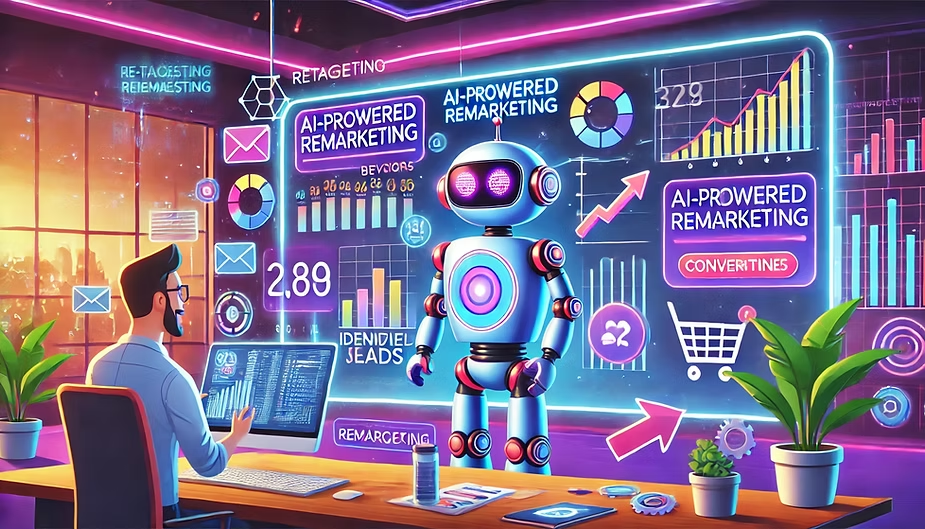
Modern deep digital marketing offers run-by-run (store by store) artificial intelligence re-targeting at a single user, to revisit a previously viewed candidate buyer, to purchase a product, given a virtual store, virtual out-of-house, and virtual in-store environments. Based on data-grounded insights, AI fine-tunes ad exposures, personalizes content and increases the probability of conversions, creating an engaging, personalized environment for consumers. Generating leads is just the beginning of a good marketing funnels, the real challenge is in nurturing that leads and pushing them on to a purchase action. It is an important factor in getting there that AI-powered remarketing delivers precisely that because it is capable of presenting potential customers with hyper-relevant, timelier and individually tailored ads while keeping them engaged on their way to conversion. This blog explores the significance of remarketing, the transformative power of AI in lead conversion, top AI tools for businesses, strategies for executing AI-driven campaigns, and emerging trends that will shape the future of remarketing. Understanding Remarketing Explanation of Remarketing and Its Significance Re-marketing is a strategy designed to re-engage individuals who have previously interacted with a brand but have not completed a desired action, such as making a purchase or signing up for a service. It also serves to maintain awareness of the brand and prompt prospects to continue on their customer journey. Traditional vs. AI-Driven Remarketing Strategies 1. Traditional Remarketing: Relies on static cookie tracking, displaying the same generic ads to all returning visitors. Poor personalization and engagement typically leads to reduced conversion rates. 2. AI-Driven Remarketing: Makes use of machine learning algorithms and predictive analytics to tailor ad content in real-time on the user behavior, very considerably enhancing engagement and conversion rates. The Role of Data in Effective Remarketing The use of AI based on much data that consumers generate (e.g., navigation patterns, purchase records, engagement statistics), is being used to facilitate hyper-personalized advertising. Analyzing user behavior, machine learning helps marketers target the right audience at the right time, generating the highest possible ROI. The Power of AI in Remarketing How AI Enhances Remarketing Efforts AI transforms remarketing by: AI transforms remarketing by: Workload used to extract from large data sets the user’s intent and behavior patterns. Automating ad placements and optimizing content in real time. Creating dynamic ad variations tailored to individual preferences. Benefits of Using AI for Targeting and Personalization Higher Engagement and Conversions: Ads with AI generation are more relevant for the user to trigger a response. Cost Efficiency: AI fine-tunes ad budgets by focusing on high-intent leads, cutting out unnecessary ad spend. Real-Time Optimization: AI constantly optimizes campaigns by using performance metrics and increases effectiveness over time. Case Studies Showcasing Successful AI-Driven Remarketing E-commerce Brand: Realized a 40% improvement in return on ad spend (ROAS) via AI-enhanced predictive targeting. SaaS Company: Used AI-powered email retargeting campaigns to boost customer acquisition by 50%. IV. Key AI Tools for Lead Conversion Overview of Popular AI Tools for Businesses Google Ads Smart Bidding  Facebook Dynamic Ads  HubSpot AI-Powered CRM  AdRoll AI Remarketing Platform  Salesforce Einstein AI  Features and Functionalities of These Tools Automated Bid Adjustments: AI optimizes bids based on user engagement probabilities. Behavior-Based Dynamic Ad Placements: Ads adjust dynamically based on user preferences. Predictive Lead Scoring: AI identifies the most promising leads for targeted campaigns. C. Comparison of Tools Based on Effectiveness and Ease of Use Tool  Ease of Use  Effectiveness  Google Ads  Moderate  High  Facebook Dynamic Ads  High  High  HubSpot CRM  High  Moderate  AdRoll  Moderate  High  Salesforce Einstein  Moderate  Very High  Creating Targeted Campaigns with AI Identifying and Segmenting Leads AI-driven segmentation targets lead= based on their behavior, demographics and level of engagement to guarantee highly targeted messages. Crafting Personalized Messages and Offers Dynamic ad content, customized promotions, and tailored CTAs significantly enhance user engagement and conversion rates. Utilizing Predictive Analytics for Campaign Optimization This AI algorithm forecasts user behavior and figures out the optimal channels to use, when to use them, and what to put on the advertisements, in order to obtain the biggest effect. Measuring Success in AI-Driven Remarketing Key Performance Indicators (KPIs) to Track Click-through rates (CTR) Conversion rates Customer lifetime value (CLV) Return on ad spend (ROAS) Tools and Methods for Measuring Campaign Effectiveness Google Analytics AI-powered marketing dashboards A/B testing tools Adjusting Strategies Based on Performance Data AI continuously refines ad campaigns by analyzing engagement patterns and optimizing elements in real time. Overcoming Challenges in AI Remarketing Common Obstacles Businesses Face AI learning curve Budget constraints Solutions and Best Practices for Effective Implementation Ensuring compliance with regulations (GDPR, CCPA) Educating marketing teams on AI integration Implementing AI in phases for smoother adoption Importance of Continuous Learning and Adaptation With the continuous development of AI technology, companies need to be adaptive and rethink their remarketing approaches. Future Trends in AI-Driven Remarketing Emerging Technologies and Their Potential Impact AI-powered chatbots for real-time lead nurturing Hyper-personalization using deep learning AI-integrated voice search remarketing Predictions for the Evolution of Remarketing Strategies More emphasis on ethical AI and data transparency Augmented reality (AR) ads for immersive remarketing experiences Preparing for Changes in Consumer Behavior Adapting to evolving customer expectations ensures long-term remarketing success. Best Practices for Implementing AI Remarketing Steps to Integrate AI Tools into Existing Marketing Strategies Select AI platforms that align with business objectives. Use customer insights for precise targeting. Continuously optimize campaigns based on performance data. Importance of Testing and Iteration Frequent A/B testing enhances AI-driven remarketing effectiveness. Building a Customer-Centric Approach Emphasis on user experience and openness builds trust and brand loyalty. Conclusion AI-driven remarketing has revolutionized digital advertising, enabling businesses to reconnect with leads in a highly personalized and efficient manner. Using artificial intelligence (AI) tools and methods, firms can vastly improve their conversion rates, their purchase of advertising, and delivery of an uninterrupted customer experience. As artificial intelligence technology develops, the businesses that are able to adopt these innovations will continue to lead their competition and promote long-term marketing success. As a leading AI-powered Pune-based digital marketing agency AIQ BQ focuses on using AI-powered remarketing approaches to enhance lead conversion rates. Aim to enhance your digital marketing operation by reaching out to us now.

Dynamic Ads Creation: How AI Helps Businesses Optimize Ad Copy
Safty Branding

Dynamic Ads Creation: How AI Helps Businesses Optimize Ad Copy

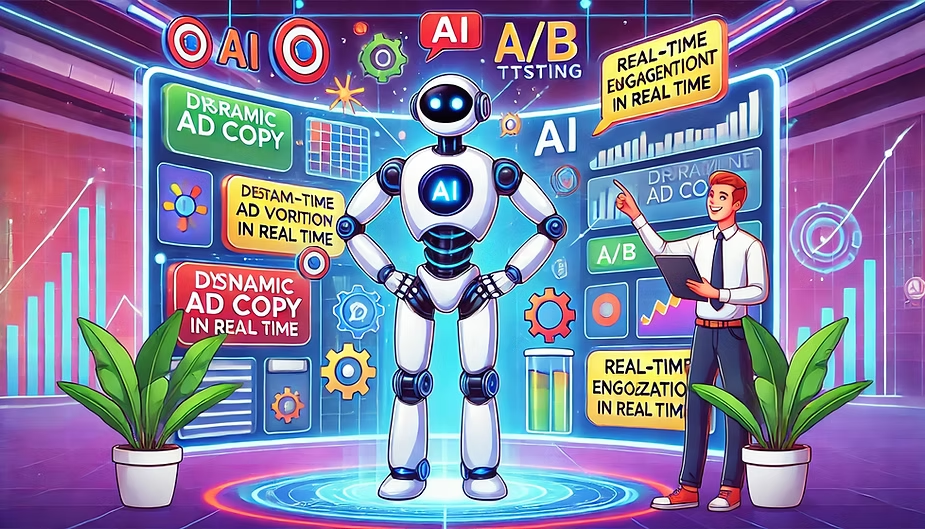
In the constantly changing world of digital marketing, companies have to create strong ads which attract consumer interest and generate interaction. Well-optimized ad copy has a major impact on the success of an ad campaign and user behavior as well as conversion rates. Dynamic ads have changed the paradigm of digital advertising by allowing the commercial to personalize content according to user characteristics, browsing behavior, and real-time interactions. Unlike traditional static ads, which present the same message to all viewers, dynamic ads adapt their content dynamically, ensuring enhanced relevance and engagement. These very adaptive ads offer companies the chance to optimize return on investment (ROI), ensuring very precise, targeted communication with targeted customers. This article explores how businesses can harness advanced technology to optimize ad copy for dynamic ads, ensuring efficient, personalized, and results-driven campaigns that align with consumer expectations and industry trends. Understanding Dynamic Ads Definition and Key Features Dynamic ads are online ads that automatically modify—i.e., change—elements of the ad (i.e., headlines, image, text description, and call-to-action) using user information. These ads take advantage of audience data to understand audience (e.g., user) traits, and build messages uniquely to particular users, resulting in higher engagement and conversion. Differences Between Dynamic and Static Ads Conventional static ads have a constant design and the same call to action for an audience, thus restricting them from appealing to the various user groups effectively. On the other hand, dynamic ads dynamically alter elements according to user interactions and provide highly personalized, rich, and targeted content. Real-time adjustment like this provides marketers to deliver highly contextual ads and their message tailored to certain consumer interests. The Importance of Personalization Modern consumers expect brands to deliver tailored advertising experiences. Generic messaging no longer holds the same appeal. Dynamic ads provide for companies to execute personalized interactions that lead to dramatically enhanced click-through rates (CTR), engagement and return on ad spend (ROAS). A correctly personalized advertisement enhances conversion and builds up a brand relationship more and more. The Role of Advanced Technologies in Ad Creation In order to maximize ad copy in dynamic ads, companies use complex technologies that ingest user behavior engagement data. These technologies play a crucial role in: Identifying audience preferences through extensive data analysis. Generating customized ad variations to improve audience targeting. Refining messaging strategies based on real-time performance insights. Enhancing ad delivery timing for maximum impact. Disease prediction with deep learning, which predicts the health of a user even before the health concern is present. Crafting High-Impact Dynamic Ad Copy Understanding Audience Segments A proper target audience is one of the most important issues when designing effective dynamic advertisement text (ad copy). Companies need to segment users according to demographic, browsing and purchase data in order to design messaging that is relevant to their needs and interest. The better refined the segmentation, the greater the chance that the advertisement will hit the right target. Utilizing Optimization Tools Many digital marketing platforms offer products based on artificial intelligence (AI) that use tools to analyze best-performing ads and provide suggestions and persuasive ad copy variations based on target audiences. These tools guarantee compelling and appropriate ad content while cutting down the guesswork that typically goes into creating traditional ads. A/B Testing for Continuous Improvement A/B testing is an essential practice for refining ad copy. Services can learn, by experimentation what versions of ad creatives are most appropriate, what messages work, and make intelligent decisions, for future campaigns. It can lead to good A/B testing which can bring to light consumer behavior and consumer preferences, enabling market practitioners to adapt their strategy over time. Personalization and Targeting for Increased Conversions Targeted advertising experiences are associated with increased engagement and conversion rates. Businesses can optimize dynamic ads by: Segmenting audiences: Categorizing users based on behavioral insights and preferences. Customizing ad content: Tailoring messaging, images, and CTAs to individual users. Leveraging real-time interactions: Adjusting ad copy dynamically based on user responses. Implementing retargeting strategies: Re-engaging users based on past interactions to encourage conversions. Utilizing geolocation-based targeting: Delivering ads based on users’ geographic locations for enhanced relevance. Case studies have provided evidence that companies utilizing hyper-personalized dynamic ads enjoy superior retention and performance metrics for the campaign, thus personalizing offers has become one of the key elements for the success of digital advertisement. Enhancing User Engagement with Optimized Ad Copy User engagement is a key performance indicator of digital advertising performance. Dynamic ads enhance interaction by: Delivering personalized messaging that resonates with individual users. Adjusting content based on real-time browsing behavior. Encouraging immediate action through compelling CTAs. Integrating multimedia elements such as videos or interactive features to capture user interest. Providing seamless cross-platform experiences for a consistent brand message. For the business, engagement can be monitored using performance indicators (KPIs) including CTR, ROAS, and conversion rates for the purpose of optimizing advertising tactics and thus optimize the business. Overcoming Challenges in Dynamic Ad Creation And yet, businesses still face challenges with the potential shortcomings of dynamic ads, such as:. Data Accuracy: Ensuring data quality and avoiding outdated or irrelevant information. Privacy Concerns: Adhering to data protection regulations to maintain consumer trust. Brand Consistency: Maintaining uniform messaging across dynamically generated ad variations. Ad Fatigue: Preventing audiences from becoming desensitized to repeated messages by refreshing ad content regularly. Technical Implementation: Smooth integration of dynamic ad platforms with traditional marketing applications. Business can effectively tackle these challenges and improve campaign performance, by adopting robust data governance policies, investing in compliance frameworks, and constantly tracking ad performance. Future Trends in Dynamic Advertising The landscape of digital advertising is constantly evolving, with new trends shaping the future of dynamic ad creation. Key trends include: Advanced Audience Insights: Enhanced predictive analytics for more precise targeting. Greater Automation: Increased reliance on machine-learning-driven ad optimization. Interactive Ad Formats: The rise of video, carousel, and immersive ad experiences. AI-Powered Chatbot Integration: Enhancing ad engagement with real-time conversational experiences. Voice Search Optimization: Adapting ad strategies for the growing voice search trend. Staying ahead of these trends will be essential for businesses looking to maintain a competitive edge in digital advertising. Best Practices for Implementing Dynamic Ads

How AI Improves Ad Targeting and Bid Management for Businesses
Safty Branding

How AI Improves Ad Targeting and Bid Management for Businesses

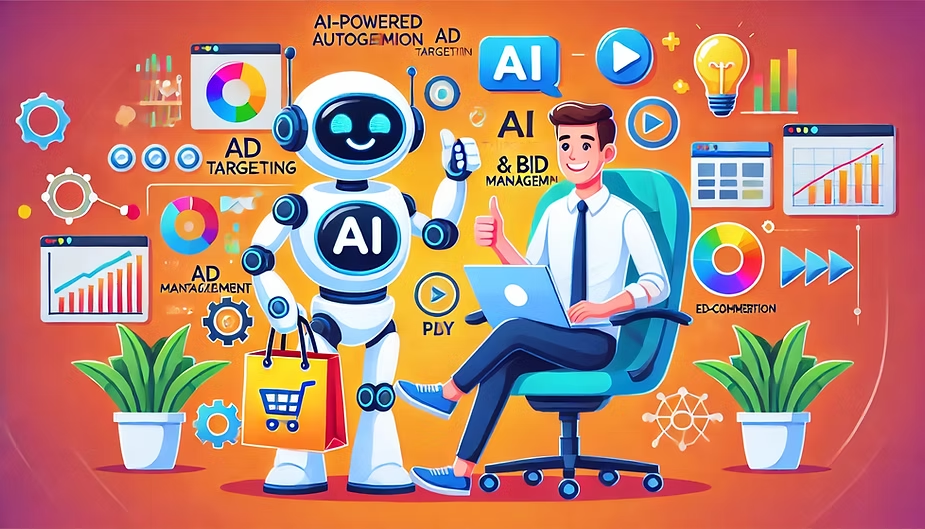
In the fast-paced digital world, businesses are always on the lookout for innovative ways to optimize their advertising strategies. Increasing competition has made traditional advertising methods ineffective in attracting audience attention. Here is where Artificial Intelligence comes into play. AI-driven advertising changes the way businesses reach their target audiences and manage ad spend efficiently. This blog discusses how AI helps in ad targeting and management of bids, which helps in improving ROI and campaign performance. Understanding AI in Advertising What is AI in Advertising? Artificial Intelligence in advertising refers to the combination of machine learning, data analytics, and automation to optimize marketing efforts. The power algorithms in AI analyze large data points of consumer behavior and form patterns while predicting behavior and making real-time changes in the campaigns. How AI is Incorporated into Advertising Platforms The modern advertising platforms, such as Google Ads, Facebook Ads, and LinkedIn Ads, use AI to improve targeting, bidding, and content personalization. They utilize machine learning to analyze user data, thus allowing advertisers to create highly relevant and effective campaigns. Evolution of AI in Advertising From basic keyword targeting to sophisticated predictive analytics, AI has evolved a lot. From manual data analysis for campaign refinement by marketers to AI automating and enhancing decision-making, businesses can now achieve better results with minimal effort. Role of AI in Ad Targeting Importance of Ad Targeting for Businesses Ad targeting ensures that marketing efforts reach the right audience at the right time. Poor targeting leads to wasted budgets, low engagement, and reduced conversions. AI-powered targeting refines audience selection, enhancing campaign efficiency. How AI Identifies Target Audiences AI analyzes consumer behavior, demographics, interests, and past interactions to create detailed audience segments. Machine learning models predict user intent, allowing businesses to deliver highly personalized ads that resonate with potential customers. AI-Driven Targeting Techniques Predictive Analytics: AI predicts consumer actions based on past behaviors and engagement patterns. Behavioral Targeting: AI tracks user activities across websites and social media to create personalized ad experiences. Lookalike Audiences: AI can help find new customers by checking the profiles of current customers and then drawing a list of other people with the same characteristics. Advantages of AI Targeting Ads Improved Accuracy: AI ensures businesses reach the most relevant audiences, thereby avoiding wasted ad spend. Personalized Ads: AI does dynamic ad personalization, thus increasing the engagement rates. Higher Returns on Investment: Since the targeting is optimized, the business converts better and makes a higher return. AI in Bid Management PPC Understanding PPC Advertisement The model for PPC involves charging the customer each time they click on his or her advert. PPC management calls for appropriate bidding to improve the visibility without blowing the budget. AI Bidding Management Optimization Strategies AI allows the adjustment of bids in real-time based on competition, intent, and many other factors for historical data and even learns as it goes with strategies to increase its results for optimum performance. Automated Bidding Strategies Smart Bidding: Uses machine learning to automatically adjust bids for maximum conversions or value. Target CPA (Cost-Per-Acquisition): Bids are adjusted to meet a desired cost per conversion. Maximize Conversions: AI disburses budgets to maximize overall conversions within a given budget. Benefits of AI-Monitored Bid Management Real-Time Adjustments: AI analyzes live data, creating an ability to make immediate bid adjustments. Cost Efficiency: AI optimizes budgets to minimize unnecessary ad spend. Competitive Advantage: AI helps businesses compete in ad auctions through dynamic strategies. Successful Implementations of AI 1. Business 1: Online Retailer E-commerce In this case, an e-commerce retailer used AI-driven targeting and smart bidding to improve conversion by 35% and reduce the cost per acquisition by 20%. 2. Business 2: SaaS Company A SaaS provider utilized AI-based bid management to automate its PPC campaigns. As a result, the quality of leads improved by 40% while manual workload reduced by 60%. Challenges and Considerations Implementation Challenges Upfront Investment: The initial investment might be necessary in using AI tools and automation. Data Dependency: AI needs good-quality data for the accuracy of prediction. Future Trends in AI Advertising Emerging Technologies AI-Powered Voice Search Advertising: Optimizing ads for voice search queries. Augmented Reality (AR) Ads: AI-driven AR experiences for interactive advertising. The Future of AI in Ad Targeting and Bidding With AI becoming more precise, predictive, and autonomous with constant developments, it is going to provide businesses with unparalleled marketing opportunities. Conclusion AI advertising is transforming ad targeting and bid management, which in turn makes campaigns efficient, cost-effective, and impactful. Businesses leveraging AI-powered solutions are superior, as their advertising will be optimized in relevance and budget allocation. Want to tap into AI for your digital marketing success? We at AIQ Brand Quotient, an AI-powered digital marketing agency in Pune, help you optimize your ad targeting and PPC campaigns to get the most ROI. Reach out to us today!

AI vs Traditional Digital Marketing: Which is Better?
Safty Branding

AI vs Traditional Digital Marketing: Which is Better?

Marketing has evolved considerably through the years from conventional advertising techniques to online and, more recently, from Artificial Intelligence (AI) based strategies. Businesses will need to respond to these shifts in order to remain competitive and service their audiences in a productive way. As AI moves deeper into the heart of today’s marketing, it is critical to learn how AI is affecting the market compared to the way it is currently used with basic digital marketers. In order to optimally leverage their marketing potential, companies should also compare both options. This blog explores the differences between AI-driven and traditional digital marketing, comparing their effectiveness, costs, targeting capabilities, and future trends to help businesses make informed decisions. Defining Traditional Digital Marketing Key Characteristics and Strategies Conventional digital marketing is based on manual-controlled actions, including search engine optimization (SEO), content marketing, email marketing and social media management, etc., to interact with the audience and generate conversions. Common Tools and Platforms Used Major tools are: Google Ads, Facebook Business Manager, HubSpot, Mailchimp, and content management systems such as WordPress.  Benefits and Limitations Conventionally, marketing through brand stories and direct human management are powerful, but time-consuming, less flexible and hard to extend compared with using artificial intelligence (AI)-driven automation. Understanding AI in Marketing Explanation of AI and Its Applications in Marketing AI uses machine learning, predictive analytics, and automation to maximize marketing workflow. It allows companies to customize customer interactions, automate campaigns, and study massive datasets, to help businesses make more informed decisions. Examples of AI Tools and Technologies Examples of widely used, AI-driven, marketing tools are: ChatGPT (content creation) Google’s RankBrain (search optimization) HubSpot AI-based CRM programmatic ad-servers.  Advantages and Challenges of AI Marketing AI offers unparalleled efficiency, data-driven personalization, and real-time analytics. However, it presents challenges such as high initial costs, data privacy concerns, and the need for skilled implementation. Comparing Effectiveness: AI vs Traditional Marketing Metrics for Measuring Success These key performance indicators (KPIs) including conversions, customer interaction, return on investment (ROI), and customer lifetime value (CLV) are used to minimize marketing effectiveness. Case Studies Showcasing Results from Both Approaches Brands such as Nike are utilizing AI-based personalization and so is Coca-Cola, with successful story-telling campaign. Success depends on how each method is executed and if the audience is involved. Audience Engagement and Personalization AI-based marketing excels at hyper-personalization whereas conventional non-AI-based digital marketing depends on large-scale segmentation and manual fine-tuning. Cost Implications Budget Considerations for Traditional Marketing Traditional digital marketing costs include ad placements, content creation, and manual campaign management, making it cost-intensive over time. Investment in AI Technologies AI does need an initial investment in tools, software, and training, but at the same time it automates marketing operations and reduces operational costs in the long run. Long-Term Financial Benefits of Each Approach AI provides automation-based cost savings, whereas conventional marketing means constant effort to commit resources to achieve results. Also read our blog on “Why Businesses Need AI-Powered Digital Marketing in 2025“. Targeting and Segmentation Traditional Methods of Audience Targeting Demographic-based targeting, keyword research and retargeting campaigns are the core of conventional digital marketing. AI-Driven Segmentation and Targeting Capabilities AI employs predictive modeling and behavioral analytics to optimally adapt to the evolving targets such as precision. Impact on Campaign Effectiveness Thanks to AI-based targeting, conversion rates increase by providing hyper-relevant information to an appropriate target audience at the appropriate time. Future Trends in AI Marketing Predictions for AI Advancements in Marketing AI will continue to develop, with progress in voice search, chatbots, and predictive customer insights, changing marketing engagement. Integration of AI with Other Technologies AI will be combined with blockchain for end-to-end encrypted interactions, IoT for real-time interactions, and AR/VR for interactive and immersive experiences with the brand. Potential Shifts in Consumer Behavior Consumers will seek hyper-personalized, and thus AI-powered, experiences and AI-driven marketing will become imperative for future success. Limitations of Traditional Marketing in a Digital Age Conventional approaches are challenged to keep pace with the speed capabilities and data-driven refinement of AI. Case Studies: Success Stories Brands Successfully Using Traditional Marketing Brand storytelling campaigns for Coca-Cola have become a standard in the successful applications of traditional digital marketing. Brands Leveraging AI for Marketing Success AI–based recommendations engine at Amazon and content presentation at Netflix demonstrate the disruptive potential of AI. Lessons Learned from Both Approaches Although AI improves the efficiency, there still exists a need for the human feel—the effective mix of AI and human touch usually exists. Conclusion Both AI-driven and traditional digital marketing have unique strengths. AI is superior to traditional marketing in terms of automation, efficiency, and individuality, whereas traditional marketing provides strategic control and creative narrative telling. The optimal way depends on business requirements, cost, and target market. A hybrid strategy often yields the best results. Marketing is a constantly changing industry and companies need to react to changing dynamics by being innovative. Accompanying unprecedented advances in artificial intelligence (AI), by applying well-tested approaches, are likely to bring ongoing success. Elevate your marketing game with the right strategy. No matter the reality, AIQ Brand Quotient enables you to have tangible success, be it with the aid of AI-augmented automation or classic digital smarts. Let’s discuss your next big move—contact us today!

Why AI is Essential for PPC Campaign Success
Safty Branding

Why AI is Essential for PPC Campaign Success

AI has emerged as a revolution in the ever-evolving digital marketing world. Marketers are now starting to apply artificial intelligence to optimize their strategies and gain better results. One area where AI has made a significant impact is Pay-Per-Click (PPC) advertising. PPC campaigns enable firms to make ads on search engines or other online media, however, the firms solely pay when the searched person clicks on the ad. Nevertheless, effective campaign management relies on appropriate targeting, tactical bidding, and ongoing refinement. Now is the time for AI-driven-solutions and that of PPC-campaigns which has not been as efficient and effective as it is now. Understanding PPC Campaigns An approach to advertising in which advertisers bid on search terms in order to show their ads to a specific group of people, namely, is PPC advertising. When a user enters the right key words, an advert is generated for the user and the advertiser is paid when the advert is clicked by the user. Key Components of a Successful PPC Campaign: Keyword Research: Finding the right keywords to target. Ad Copy & Creatives: Creating compelling ad content. Bidding Strategy: Setting optimal bids for keywords. Landing Pages: Ensuring high-converting destinations. Performance Tracking: Monitoring and optimizing results. Yet, with regard to the onset of PPC campaign, marketers bemoan the intense competition, unpredictable ad rates, and universal optimization that is necessary. AI helps overcome these hurdles. The Role of AI in Digital Marketing Through the automation of complex tasks, through the harnessing of massive data sets, and through the use of data-driven propositions, artificial intelligence is transforming digital marketing. AI applications in marketing include: Chatbots & Virtual Assistants for customer interactions. Predictive Analytics to forecast trends and behaviors. Automated Content Generation to create engaging copy. Personalization Engines to tailor user experiences. By using AI to model the way marketing is done, companies are able to achieve maximal efficiency, precision and return on investment. AI-Driven Solutions for PPC Campaigns Smart Bidding: AI reads historical data and adapts bids in real-time. Automated Ad Targeting: AI refines audience selection based on behaviors and demographics. Predictive Analysis: AI forecasts campaign performance and suggests improvements. Dynamic Ad Creation: AI provides and validates a number of ad variations for improved engagement. Enhancing Targeting and Segmentation with AI Effective targeting is one of the key factors for successful PPC campaign to reach target audience. AI helps in: Audience Segmentation: AI clusters audiences according to behavior, area, interest, age and demographics. Lookalike Audiences: AI identifies similar users to expand reach. Real-Time Adjustments: AI continuously refines targeting based on performance data. Case Study: In e-commerce industry, an innovator with AI-powered targeting has delivered a 35% rise in conversion rates and also achieved a reduction in ad expenditure. Optimizing Ad Copy and Creative with AI AI enhances PPC ads by: Generating Ad Copy: AI generated text (e.g. ChatGPT) is engaging and suitable for use in advertisements. A/B Testing Automation: AI tests various versions of the advertisements and selects the most effective versions. Visual Recognition: AI optimizes image selection for maximum impact. AI allows advertisers to provide not only ad relevance to their target audience but also improvements on engagement and conversions in turn. Budget Management and Bidding Strategies . Automated Budget Allocation: AI distributes budgets based on performance trends. Smart Bidding Strategies: AI analyzes competitor bids and adjusts accordingly. Real-Time Optimization: AI continuously refines bidding strategies to maximize ROI. Companies that have already implemented AI-based bidding strategies have been able to sustain an uplift in ad performance and cost efficiency of 20-40%. Measuring Success: Analytics and Reporting Data analytics plays a crucial role in PPC campaigns. AI enhances analytics by: Real-Time Performance Tracking: AI monitors metrics like CTR, CPC, and conversion rates. Automated Reporting: AI generates detailed reports with actionable insights. Performance Prediction: AI forecasts future trends based on historical data. There are deep learning and analytics capabilities in the form of the popular AI platform, e.g, Google Ads Smart Bidding and Adobe Sensei. Future Trends in AI for PPC Campaigns AI in the future of PPC is promising with early trends, e.g. AI-Powered Voice Search Optimization: Adapting PPC for voice-based queries. Hyper-Personalization: AI delivering highly customized ads in real-time. Augmented Reality (AR) Ads: AI enhancing interactive ad experiences. Automated Campaign Management: Artificial intelligence-based prediction, fully automated management, of entire PPCs with only human supervision. Conclusion AI has become an imperative part of PPC campaign optimization. By leveraging AI-enabled tools, marketers are in the position to further enhance the accuracy of targeting, ads creative optimization, cost optimization as well as analytics user generated insights. As the continued emergence of AI, companies that leverage AI will continue to possess competitive edge within digital marketing. Marketers are called upon to increase awareness of, and implement artificial intelligence (AI) enabled tools, in order to further enhance the efficiency and return on investment of their PPC campaigns. Want to achieve outstanding results with your PPC campaigns? AiQ Brand Quotient, powered by the latest AI technology, can help you optimize targeting, bidding strategies, and ad creatives for maximum efficiency. Using state-of-the-art tools such as ChatGPT, Gemini and DeepSeek, AiQ Brand Quotient provides AI powered PPC solutions to get improved ROI. Make use of AI-enabled insights today and take PPC to the next level!

How AI Can Help Businesses Optimize Customer Journeys
Safty Branding

How AI Can Help Businesses Optimize Customer Journeys

Customizing the customer experience in today’s ever changing business world is essential to achieving longitudinal brand equity, customer loyalty, and market success. Systematic mapping of these journeys enables companies to form better, more accurate, and nuanced knowledge regarding customers’ expectations, refine their engagement tactics, and build lasting customer loyalty. Artificial Intelligence (AI) has emerged as a disruptive player in this domain, by introducing advanced computational approaches that can be used to leverage behavioral data, to predict product demand, and to offer hyper-personalized experiences. This article explores the multifaceted role of AI in optimizing customer journeys, enhancing operational efficiencies, and driving strategic decision-making. Understanding the Customer Journey 1. Awareness: Potential customers are introduced to the brand for the first time through different channels, including digital marketing, social media, word of mouth, or print advertising. Business needs to develop compelling brand messaging, interesting content, and focused campaigns to grab attention and increase interest. 2. Consideration: At the consideration stage, prospective customers actively search, compare, and analyze various products or services to find the most suitable for their requirements. They look for information from reviews online, testimonials, product descriptions, and competing products. Companies can optimize this stage by presenting detailed, transparent, and convincing content, including case studies, demonstrations, and recommendations tailored to individual needs. 3. Purchase: The buying stage is the culmination of the transaction when customers make a final choice and engage with the product or service for the initial time. Smooth and intuitive purchasing experience, along with transparent pricing, safe payment methods, and good customer care, can largely improve the customer experience and reduce cart abandonment. 4. Retention: Post-purchase interaction is essential to ensure customer satisfaction and develop long-term relationships. Companies can reinforce retention through personalized follow-ups, loyalty rewards, special offers, and great customer service. Offering educational material, product announcements, and active support guarantees ongoing value and builds user experience. 5. Advocacy: Happy customers turn into brand champions by word-of-mouth, online reviews, and social media. Fostering customer advocacy through referral schemes, user-generated content, and community participation can enhance brand visibility and credibility. Strong relationships with loyal customers convert them into long-term ambassadors who drive new potential customers. Customer journey mapping is central to business, enabling them to learn the pain points, re-design the experience, and improve customer journey experience through data-driven decisions for lasting business growth. The Role of AI in Analyzing Customer Data AI increases data processing power, giving companies the ability to glean actionable knowledge from big data. Through advanced machine learning models, AI can: Identify complex patterns in consumer behavior. Accurately predict purchase inclinations. Divide audiences according to fine-grained behavioral and demographic criteria. Key AI Methodologies for Data Analysis: Machine Learning Algorithms: Implement supervised and unsupervised learning algorithms for consumer taste modelling. Natural Language Processing (NLP): Facilitate sentiment analysis through computational linguistics. Customer Data Platforms (CDPs): Combine multiple data streams into a common analytical framework. With such sophisticated tools, corporations can implement more efficient engagement approaches and consequently achieve more personalized engagement. Personalization Through AI Today’s consumers made a demand for customized experiences which match their personal taste. AI-driven personalization enhances customer satisfaction and engagement through: Recommendation Systems: Now in use by pioneers such as Amazon and Netflix for providing personalized content and product recommendations. Dynamic Content Optimization: Real-time customization of digital touchpoints based on user behavior. Predictive Targeting: AI-categorized segmentation enables extremely accurate marketing campaigns, with optimal conversion rates. By applying AI-enabled personalization, it is possible to build, expand customer relationships, foster loyalty, and maximize lifetime value. Enhancing Customer Interactions with AI Customer engagement has been re-conceptualized by application of the power of Artificial Intelligence (AI)-enabled automation-interactions that are real-time, intelligent, and context-aware. Prominent AI-Powered Customer Interaction Tools: Conversational AI: Chatbots and virtual assistants handle query resolution and improve its service efficiency. Voice Recognition Technologies: Assistive AI interfaces (like Alexa and Google Assistant) enhances usability. Automated Communication Systems: AI-driven email campaigns and notifications optimize customer engagement workflows. These AI-driven solutions make it possible for companies to scale up, be efficient, and personalize in addition to improving the quality of service and time response. Predictive Analytics for Anticipating Customer Needs With the power of AI in play, predictive analytics leverages it to predict customer needs and can thus be proactive about expected pain points. Key AI Applications in Predictive Modeling: Churn Analytics: The identification of at-risk customers at an early stage enables using specific retention techniques. Behavioral Forecasting: AI synthesizes historical data to predict future purchasing patterns. Intelligent Inventory Management: AI-enhanced demand forecasting minimizes stock inefficiencies. Case Study: These big retailers (e.g., Walmart) have been implementing AI-based predictive analytics for improved control of led acquisition to ensure items being put on shelf are in accordance with an estimated demand variation trend. Streamlining Operations with AI AI is also much more than just customer interaction, but also to how AI can help execute business processes within the organization, to improve efficiency and delivery of service. AI-Driven Operational Improvements Automated Supply Chain Management: AI optimizes logistics and demand planning. Cognitive Process Automation: AI-driven workflows eliminate manual bottleneck-based inefficiencies in customer service and operations. Real-Time Performance Analytics: AI-driven dashboards offer real-time insights for operational decision-making. Enhanced of this process is permitting them companies, meanwhile, that concentrate on optimal uses of resources, and as well that improve the customer satisfaction of the business. Measuring Success: KPIs and Metrics To understand the effect of AI on customer journeys, it is important to have a robust set of Key performance Indicators (KPIs). Essential AI-Driven Performance Metrics: Customer Satisfaction Score (CSAT): Quantifies customer experience efficacy. Net Promoter Score (NPS): Evaluates customer advocacy and brand perception. Conversion Rate Optimization (CRO): Measures AI’s influence on consumer decision-making. Customer Lifetime Value (CLV): Assesses the long-term sustainability of customer engagement. Through AI-powered analytics engines (Google Analytics, HubSpot, Adobe Experience Cloud), companies can gain quantifiable actionable insight to optimally adjust their customer engagement strategies. Challenges and Considerations Despite the fact that AI has brought challenges, organizations are facing issues and ethics of AI-based solutions. Principal Challenges: Data Governance and Privacy Compliance: Adherence to regulations such as GDPR is paramount. Algorithmic Bias and Fairness: AI systems must be developed to mitigate unintended biases. Cost-Benefit Analysis: AI

AI-Powered Marketing for Startups: Cost-Effective Strategies
Safty Branding

AI-Powered Marketing for Startups: Cost-Effective Strategies

The digital marketer’s world is undergoing rapid transformation and probably no other development has been more disruptive over the past few years than the advent of artificial intelligence (AI). There are ways in which AI can be leveraged to improve customer interaction, improve marketing efficiency, and create growth for companies of all sizes. However, for start-ups, it is not a question of adopting some novel technologies but how to adopt and achieve the novel technologies at the lowest cost. As the start-up is normally prone to limited funds and resources, there is an increasing demand for smart scalable powerful solutions as a way of handling the business problems posed by the entrenched competitors. Here lies AI powered marketing strategies. This blog post explores how startups can leverage AI for cost-effective marketing, enabling them to reach their target audiences more effectively and efficiently while staying within budget. Understanding AI in Marketing At the outset, it is also important to define what actually AI is in marketing. AI marketing refers to the utilization of AI technology that automates and improves marketing tasks. It is based on the application of machine learning algorithms, natural language processing, and predictive analytics for the analysis of data, the segmentation of audiences, trend prediction, and content personalization. Key Components of AI Technology in Marketing: Machine Learning (ML): Adaptive systems that learn from data and improve with time. They are not fixed. Natural Language Processing (NLP): It supports machines to understand and transcribe the human language, thereby helping the existence of chatbots as well as adaptive content generation. Predictive Analytics: Historical data is used to predict the future change as well as expected customer behavior. Automation Tools: Automate routine tasks, email, posting on social media, optimization of ad campaigns, etc. By integrating AI in their marketing, startups can benefit from tools available to large corporations, which reduces the gap in the market. The Importance of Cost-Effectiveness for Startups Startups are ones that, often from day one, have a limitation attached to every dollar made and therefore marketing spending is one of the first expenses to be slashed. Even in the difficult scenario of traditional marketing means (and their corresponding high media buying, staffing costs, and so on). Nevertheless, AI-powered marketing tools offer not only a low-cost, but also a practical solution. With AI, startups can: Maximize their limited resources by automating repetitive tasks. Acquisition of precious insights and data driven decisions without the need for a large marketing organization. Personalized campaigns at a lower cost than customarily necessary for personalized marketing. Not only is the low-priced marketing activity efficient in saving expenses for startups, but it also enabled startups to compete with major companies by further increasing the mileage and effectiveness of their own campaigns. AI Powered Tools for Startups There are numerous AI-based tools available to startups that help optimize marketing efforts in the best possible manner. From email automation to social media management and CRM systems, AI tools offer an abundance of things. Here is a list of popular AI marketing tools for startups: HubSpot Marketing Hub: A continuous CRM as the neural interface, featuring process-driven AI-based email processing, content processing, and lead processing. Hootsuite: It applies AI to the optimization, scheduling, and analysis of social media content. Mailchimp: Provides artificial intelligence (AI)-enabled analytics for email campaign available to startups to augment to increase open rate and conversions. SurferSEO: Leverage the usage of AIs in giving SEO recommendations that help in content optimization for startups and increased ranking in search engines. Chatbots, for example, Drift and Intercom, are AI-powered chatbots which generate traffic, give answers and generate real-time enquiries. They are scalable as well as flexible in the sense that the startup can choose to use the features that meet their own requirements and cost. Data-Driven Decision Making AI is one of the biggest selling points in the field of marketing today is its capability to handle huge number of data points very fast and with high accuracy. For startups, this means being able to make informed decisions based on data, rather than relying on gut instinct. How Startups Can Leverage Data Analytics: Customer Segmentation: The AI will be able to know what the customers are behaving and the characteristic of customers to build a detailed customer profile, which will get the precision targeting. Management of Trends: Predictive analytics can pinpoint trends and give businesses the tools to predict market changes before they occur. A/B Testing: AI tools can run A/B tests automatically and thus determine which marketing techniques work best. Case Study: An e-commerce company has used AI-based decision-making strategies to leverage customer data for this purpose and enhance its advertisement policy. It categorized them into users of buying behavior and users of buying preferences, and they experienced a 30% increase in conversion, thereby proving the value of data-driven activities. Personalization and Customer Engagement Personalized marketing is no longer an option, but the only decision. Through the power of AI startups can deliver highly personalized, targeted, marketing experiences that can be more effective at dealing with audiences on a more personal level. AI Techniques for Personalizing Marketing: Dynamic Content Creation: AI can be applied to produce individualized emails, product recommendations and advertisements fitting to user history. Customer Journey Mapping: Tools powered by AI can capture the customer’s location in their customer journey path and then serve relevant content during the best time. Predictive Personalization: AI can forecast if a customer will be interested in a product or service, and in so doing, give the customer an experience that is unique to them. Example: A subscription-based business discontinued email marketing by using artificial intelligence to tailor emails. By analyzing the behavior and preferences of customers, they generated personalized emails with individual product recommendations that led to a sales increase of 20%. One of the most significant benefits of AI for startup marketing is automation. Automation of mundane tasks, such as sending emails, scheduling social media posting, and responding to customer inquiries frees up marketing teams for activities like strategy planning that will grow the business. AI Solutions for Automating Marketing: Automated Email

How AI Personalizes Marketing for B2B and B2C Businesses
Safty Branding

How AI Personalizes Marketing for B2B and B2C Businesses

Marketing personalization has evolved from basic email personalization to real-time, AI-based experiences that are customized according to the users’ tastes. Regardless of whether it is in B2B or B2C, enterprises that provide personalized interaction experience have higher engagement, customer retention, and also higher conversion rates. Artificial Intelligence (AI) changes marketing by applying customer data analytics, behavioral predictions, and automated personal content distribution. AI ensures that businesses deliver the right message to the right audience at the right time, thus optimizing customer journeys for maximum impact. On the one hand, B2B marketing is long-term-based, account-based, while B2C is short-term-based, real-time-based, emotionally based. AI enhances personalization in both sectors, tailoring experiences based on distinct buyer behaviors. Understanding AI Marketing Personalization Definition of AI Marketing Personalization AI marketing personalization uses machine learning, predictive analytics, and automation to deliver highly relevant marketing content, recommendations, and experiences to users based on their behavior, preferences, and interactions. Key Technologies Involved Machine Learning (ML): Analyzes past customer interactions to predict future behaviors. Natural Language Processing (NLP): Helps in chatbots, sentiment analysis, and content recommendations. Big Data Analytics: Identifies patterns in consumer behavior to tailor marketing strategies. AI-Driven Personalization: Provides the flexibility to personalize real-time emails, ads, and website experience. Benefits of Personalization for Businesses There is increased engagement due to the relevance and the message that has been tailored. Enhanced customer loyalty through building of better relationships based on experiences. Better probability and chances of conversion through the use of AI-driven recommendations. There is an increase in the number of sales and lead generation. Role of AI in B2B Marketing Challenges Unique to B2B Marketers Long sales cycles involving multiple decision-makers. Complex customer journeys that necessitate multiple touchpoints. A requirement for extremely targeted content for nurturing relationships. How AI Solves the Above Problems AI gives B2B marketers the advantage of auto-mating the lead nurturing process through identification and prioritization of high-potential accounts and through personalized data-driven communication with multiple decision-makers. AI Tools Used in B2B Marketing HubSpot: AI- automates personalization of email and lead segmentation. Salesforce Einstein: AI-driven analytics for sales forecasting. LinkedIn Sales Navigator: AI-enhanced insights for targeted outreach. AI Personalization Techniques for B2B Account-Based Marketing (ABM) and AI AI-based ABM enables organizations to offer customers personalized campaigns at the highest level based on their interests, behavior, and engagement history. Predictive Analytics for Lead Scoring and Nurturing AI assigns scores to leads based on a lead’s propensity to convert so that businesses know which leads to focus on. Personalized Content Recommendations Against Buyer Behaviors AI sends whitepapers, case studies, webinars, and the like dynamically against a buyer’s past interactions, which deepens engagement. The Role of AI in B2C Marketing Comparison Between B2B and B2C Marketing Strategies B2B: Relationship-driven, long sales cycles, data-intensive decision making. B2C: Emotion-driven, short cycles, real-time personalization of buying. How AI Enhances Customer Experience in B2C AI enables personalized product recommendations, personalized advertising, dynamic pricing and interactivity of customer service that make the purchase experience better. Success Cases of B2C through AI Amazon: AI-generated product recommendations to sell more Netflix: Content recommendations personalize your streaming experience; they increase users’ retention on the platform. Nike: AI-powered chatbots provide personalized product recommendations. AI Personalization B2C Real-time Content Personalization on Website and Emails AI dynamically controls the layout for the websites, subject lines of e-mails, and product suggestions based on customers’ real-time actions. Chatbots and Virtual Assistants for Engagement AI-powered chatbots enable on-demand personalized customer service as well as promotion of products to customers. Social Media Targeting and Ad Personalization Using AI-based ad platforms, the user behavior is decoded in order to provide hyper-targeted ads, which leads to increased ad relevance and conversion rates. Data Privacy and Ethical Considerations Importance of Data Privacy in AI Marketing To build trust, organizations will need to put data security, transparency, and user consent at the forefront through AI-powered personalization. Balancing Personalization with Consumer Trust Over-personalization can feel intrusive. There is a need for businesses to figure out the best approach between tailored experiences and privacy concerns. Regulatory Frameworks Affecting AI Marketing Practices GDPR (Europe) – Ensures transparency in data collection. CCPA (California) – Protects consumer data rights. India’s Data Protection Bill – Strengthens data privacy regulations. Measuring the Effectiveness of AI Personalization KPIs to metrics for AI-driven strategies Engagement rates: click through rates, time on site. Conversion rates: leads generated, sales growth. Customer retention: repeat purchases, loyalty metrics. Tools and methodologies for measuring success Google Analytics AI: reads user engagement and conversions. Marketo AI: provides predictive lead scoring. Salesforce AI: monitors customer journey and interactions and journey mapping. Case studies highlighting tangible outcomes. Spotify’s AI-generated playlists: Increased user retention by 60%. eBay’s AI-driven product suggestions: Boosted sales by 20%. Future Trends in AI Marketing Personalization Emerging Technologies and Their Potential Impact Voice search optimization (Siri, Alexa) AI-generated video content for personalized marketing Augmented Reality (AR) personalization for immersive shopping Predictions for the Evolution of AI in Marketing AI will continue to refine customer experiences with more advanced predictive analytics and automation tools. The Growing Importance of Personalization in a Competitive Landscape With growing competition businesses will be able to capitalize on intelligence of Artificial Intelligence (AI) to provide the one-of-a-kind hyper-personal experiences which lead the customer loyalty. Conclusion AI-enhanced personalization is used in engagement, conversions, and customer retention in the B2B and B2C industries. Businesses that use AI-driven marketing stand out and experience long-term success. Businesses are encouraged to use AI to propel growth. This is the correct time to bring AI-based personalization into your marketing strategy and keep up with the trend of the digital world! Unlock the true power of AI-driven personalization and take your marketing strategy to the next level. Whether you are B2B or B2C, AI-powered marketing solutions can drive engagement, boost conversions, and enhance customer experiences. Don’t let others get ahead of you. Start integrating AI into your marketing today and be ahead in this competitive digital landscape!

Scroll to Top