
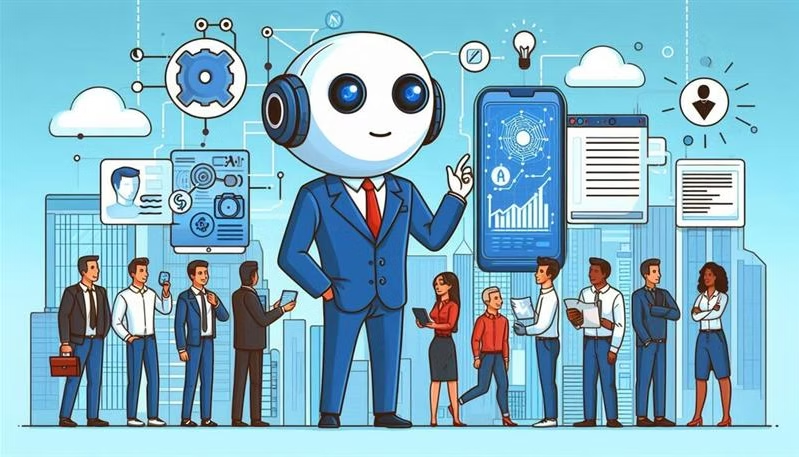
The digital marketing environment of 2025 is more volatile than it has ever been due to rapid technological evolution, shift in consumer behavior, and growth of competition. Business today has to get used to these changes in order to compete and survive.
Artificial Intelligence (AI) is one of many disruptive factors currently affecting the industry. Digital marketing using artificial intelligence (AI) is no longer a dream for the future but a requirement. AI is able to derive the best customer understanding, automate marketing tasks, tailor marketing activities and redesign marketing approaches with a higher return on investment.
In 2025, companies marketing AI will have an edge in the market by improving efficiency, engagement, and return on investment. This blog discusses the reasons why digital marketing based on AI is important for companies to achieve success in this new age.
The Evolution of Digital Marketing
Digital promotion has evolved so dramatically in the past 20 years. Let’s briefly consider how we got to this point:
Traditional Marketing to Digital Dominance
Marketing has evolved considerably compared to the days of flyers, posters, and TV spots, into the digital age of social platforms, search engines, and even e-commerce. Digital marketing made it possible for brands to access larger audiences at reduced prices and hence industry transformation took place.
The Rise of AI in Marketing
With the use of ai-based technologies, digital marketing advanced significantly in recent years. AI is already helping organizations analyze data, automate tasks, predict behavior and provide hyper-personal services to their customers. This transition is the birth of a new age – an era when data-driven decision making and intelligent automation are the foundations of success.
Enhanced Customer Insights
Understanding customers is at the heart of successful marketing. AI enable companies to analyze deep levels of customer data in real time and extract rich customer needs and want insights.
How AI Analyses Consumer Behavior
AI-powered tools use machine learning algorithms to analyze:
- Website interactions (clicks, time spent, page visits)
- Social media engagement (likes, shares, comments)
- Purchase history and browsing patterns
- Search intent and keyword behavior
Processing those data, AI can forecast the customer wants, and guide Business to develop a focused marketing strategy.
The Role of Data Analytics
AI-driven data analytics enables businesses to: AI-driven data analytics enables businesses to:
- Identify customer pain points
- Understand buying patterns
- Optimize ad targeting for higher conversions
Case Study: AI-Powered Customer Engagement
An e-commerce giant, which made use of AI to analyze customer behavior and customize retail recommendations. As a result, they saw a 40% increase in conversions and a 30% boost in customer retention.
Personalization at Scale
By 2025, consumers will require that brands “know” them and respond to their needs and desires. AI enables personalization at scale and as a result it has a great potential to deliver personalized messages, product recommendations, and discounts.
AI’s Ability to Deliver Personalized Content
AI-powered tools can:
- Create dynamic email campaigns based on user behavior
- Recommend products or services that align with customer interests
- Customize website experiences for each visitor
Examples of Successful AI-Powered Personalization
- Netflix & Spotify: AI-driven recommendations keep users engaged.
- Amazon & Flipkart: Personalized product suggestions boost sales.
- E-commerce brands: AI-driven chatbots assist shoppers in real-time.
Through AI-based personalization, businesses can increase the level of engagement, the conversion rate, and customer satisfaction.
Automation of Marketing Processes
Marketing automation based on AI automates repetitive functions, freeing up teams to engage with strategy and creativity.
Key AI-Powered Automation Tools
- Chatbots & Virtual Assistants: Provide instant customer support.
- Email Marketing Automation: Sends personalized emails at the right time.
- Social Media Scheduling & Ad Optimization: Ensures consistent engagement.
Benefits of Marketing Automation
- Saves time and reduces manual workload
- Enhances efficiency and consistency
- Increases engagement through timely responsesCompanies that have put automation in place experience 30-40% productivity improvements and improved customer delight.
Predictive Analytics for Better Decision-Making
Due to the efficacy of AI to predict consumer behavior and market evolution, companies have strategic advantages.
How Predictive Analytics Works
AI analyses historical data to:
- Identify emerging trends
- Predict buying behavior
- Optimize ad spending and marketing efforts
- Real-World Applications
- Retail & E-commerce: AI predicts which products will trend.
- Finance & Banking: AI detects fraudulent transactions.
- Healthcare & Wellness: AI forecasts patient needs.
Predictive analytics can be used by organizations to mitigate risks, enhance efficiency and improve decision making.
Improved ROI and Cost Efficiency
Leveraging of artificial intelligence (AI)-driven marketing service to produce more ROI through campaign automation, campaign optimization and management, streamlined targeting.
Cost Savings with AI
Programmatic Advertising: AI buys and serves ads in real time, reducing ad waste.
Automated Customer Support: AI chatbots reduce operational costs.
Data-Driven Marketing: AI eliminates ineffective campaigns, ensuring better spending.
Metrics to Measure AI-Powered ROI
- Customer Lifetime Value (CLV)
- Cost Per Acquisition (CPA)
- Return on Ad Spend (ROAS)
Success Story: AI in Digital Marketing
A startup cut its marketing budget by 25% but gained 40% by sales after introducing AI for ad targeting and advertisement automation.
Competitive Advantage in a Crowded Market
With increasing competition, brands must differentiate themselves. AI helps businesses:
- Identify market trends early
- Offer unique customer experiences
- Optimize marketing strategies for better engagement
Examples of Businesses Leveraging AI for Market Leadership
Nike: AI-driven product recommendations
Tesla: AI-powered customer insights
Zomato & Swiggy: AI-based personalized food suggestions
AI-driven marketing puts enterprises at the top of the line.
Ethical Considerations and Challenges
Nevertheless, companies must solve ethical problems in spite of the good potential that is ahead.
Key Ethical Considerations
Data Privacy: Customers demand transparency in data usage.
Bias in AI Algorithms: Businesses must prevent discriminatory outcomes.
Security Risks: AI must comply with regulations like GDPR and CCPA.
Strategies for Responsible AI Usage
- Adopt ethical AI frameworks
- Ensure customer data protection
- Maintain transparency in AI decisions
Once those problems are solved, it will be possible for companies to build and be taken seriously by the public.
Conclusion
AI-driven digital marketing is not only the future but the now. AI in marketing will be a force for success in 2025.
In order to flourish in 2025, businesses should adopt AI-based marketing approaches. At AiQ Brand Quotient, we are experts in Digital, Employer, and Corporate Branding working with brands to use AI for growth.
Are you ready to harness the power of AI in digital marketing? Let’s transform your brand’s future today! 🚀